
How to Build Muscle for Longevity: Science-Backed Strategies for Adults 35+
Written by John Solomou | Founder, Phoenix Wellness Team
Researched & Fact-CheckedPeer-Reviewed Clinical Literature (PubMed / NIH / ISSN)
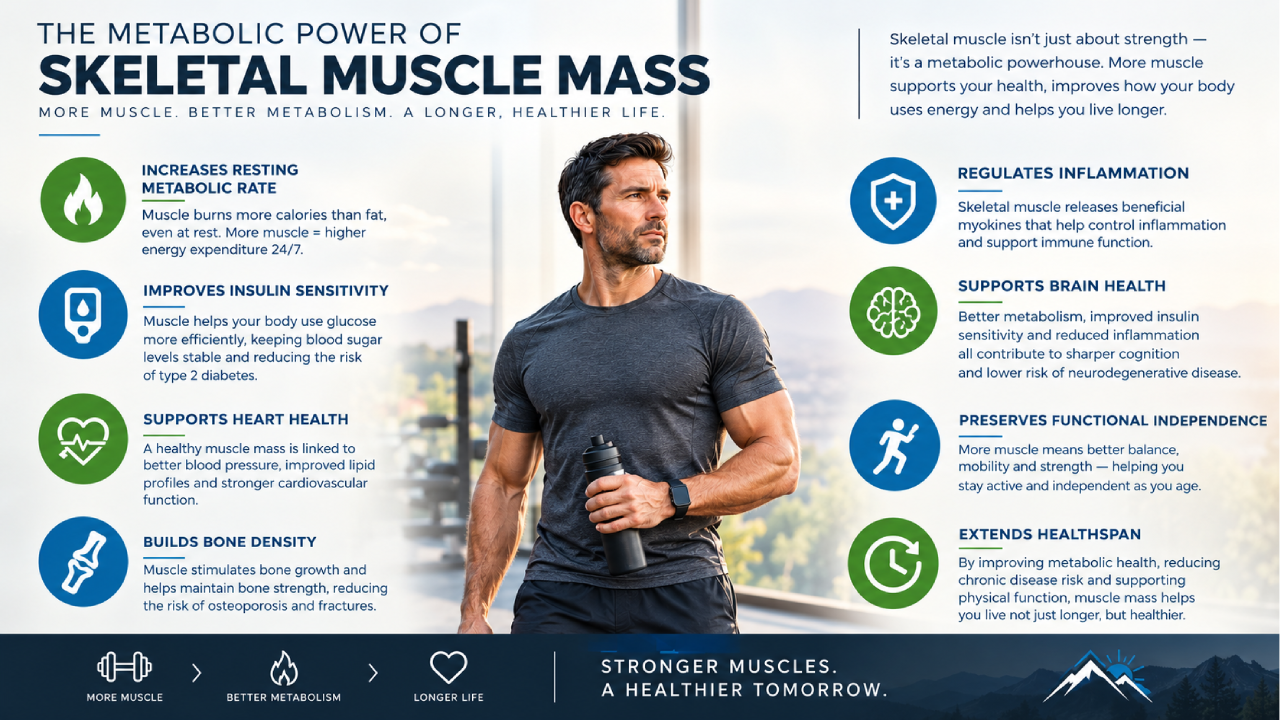
For decades, resistance training was viewed primarily through the narrow lens of bodybuilding and athletic performance. However, modern clinical literature has completely transformed how medical science views skeletal muscle.
Today, researchers classify skeletal muscle not merely as mechanical tissue for movement, but as a crucial endocrine and metabolic organ [1].
As we age past 30, unmitigated muscle loss—known as sarcopenia—accelerates, bringing higher risks of metabolic dysfunction, cognitive decline, and cardiovascular disease. Building and preserving lean tissue is one of the most powerful, controllable interventions available for extending healthspan and reducing all-cause mortality [2].
In this guide, we break down the physiological reasons muscle protects your longevity, how much lean mass you need, and the actionable training and nutrition steps required to preserve muscle for life.
---
Skeletal Muscle: Your Primary Endocrine & Metabolic Organ
To understand why skeletal muscle is directly linked to lifespan and healthspan, we must look beyond its mechanical role in moving joints and lifting weights. Modern endocrinology now recognizes skeletal muscle as the largest active organ in the human body—functioning as both an active endocrine tissue and a primary metabolic sink.
What Is the Endocrine System?
Traditionally, the endocrine system is defined as a network of glands and organs (like the thyroid, pancreas, and adrenal glands) that produce and secrete chemical messengers called hormones directly into the bloodstream. These hormones travel throughout the body to regulate target tissues, controlling metabolism, tissue growth, mood, and physiological homeostasis.
For decades, textbook physiology assumed skeletal muscle was purely a passive tissue controlled by other endocrine organs (such as the pancreas releasing insulin to move glucose). However, landmark research revealed that contracting muscle fibers synthesize, express, and secrete their own unique hormone-like signaling proteins called myokines [1].
In short: Skeletal muscle is not just a target of the endocrine system—it is an active endocrine organ itself.
```
Where Does Circulating Blood Glucose Come From?
In addition to its endocrine functions, muscle operates as your primary biological buffer for blood sugar management. Before muscle tissue can absorb glucose, it enters your bloodstream through three main physiological pathways:
- Exogenous Intake (Diet): Digestion of dietary carbohydrates (starches, sugars) broken down in the gut and absorbed as glucose into circulation.
- Hepatic Glycogenolysis (Liver Breakdown): Between meals or during overnight fasts, the liver breaks down its stored glycogen reserves to release glucose into the blood to maintain baseline glycemia.
- Hepatic Gluconeogenesis (New Glucose Creation): During extended fasting or low-carbohydrate states, the liver creates fresh glucose from non-carbohydrate precursors like amino acids, lactate, and glycerol.
Once glucose enters circulation—whether from a meal or liver production—it must be cleared to maintain optimal blood sugar levels. This is where skeletal muscle plays its critical role.
---
1. The Glucose & Lipid "Sink"
Skeletal muscle accounts for approximately 80% of postprandial (post-meal) blood glucose clearance [1]. When insulin binds to muscle receptors—or when muscles contract during exercise—GLUT4 transporters migrate to the cell surface, pulling glucose out of circulation and storing it as muscle glycogen.
High Muscle Mass: Provides a massive capacity to absorb glucose, keeping resting blood insulin levels low and protecting pancreatic beta cells. Low Muscle Mass (Sarcopenia): Dramatically reduces glucose disposal capacity. Even on a moderate diet, excess blood glucose remains elevated in circulation, driving insulin resistance, chronic low-grade inflammation, and visceral fat storage [3].
---
2. Endocrine Function: Myokine Secretion
When muscle fibers contract against resistance, they synthesize and secrete hundreds of myokines directly into the bloodstream [1, 4]. These endocrine molecules perform organ-to-organ crosstalk across the entire body:
Brain Health (BDNF): Exercise-induced myokines stimulate Brain-Derived Neurotrophic Factor (BDNF) in the hippocampus, boosting neuroplasticity, memory retention, and resilience against age-related cognitive decline. Fat Loss & Liver Health (Irisin & IL-15): Myokines signal adipose tissue to stimulate the "browning" of white fat cells (increasing resting caloric burn) and reduce hepatic (liver) fat accumulation. * Systemic Anti-Inflammatory Cascade: While acute exercise briefly increases IL-6 locally, regular resistance training produces a strong systemic anti-inflammatory response—downregulating chronic baseline inflammatory markers like TNF-alpha and C-reactive protein (CRP) [4].
---
5 Science-Backed Ways Muscle Mass Extends Healthspan
1. Significant Reduction in All-Cause Mortality
Epidemiological studies consistently demonstrate an inverse relationship between muscle strength/mass and overall mortality risk [2]. Higher relative muscle mass correlates directly with survival outcomes across cardiovascular events, metabolic disorders, and systemic infections in adults over 40.
2. Myokine Production & Systemic Inflammation Control
As noted, contracting muscles release protective signaling proteins into systemic circulation. This exercise-induced myokine output lowers chronic low-grade inflammation, enhances vascular endothelial health, and stabilizes metabolic pathways throughout the body [4].
3. Protection Against Sarcopenia & Frailty
Beginning around age 30, adults lose roughly 3% to 8% of muscle mass per decade, with the rate accelerating past age 60. Sarcopenia directly impairs mobility, balance, and bone mineral density. Preserving fast-twitch (Type II) muscle fibers ensures functional stability and protects against fall-related injury [5].
4. Improved Basal Metabolic Rate (BMR)
Muscle tissue requires significantly more resting energy expenditure than adipose fat tissue. Maintaining a high proportion of lean mass helps prevent the progressive mid-life weight gain and metabolic slowdown common in sedentary populations [3].
5. Essential Immune Defense & Emergency Amino Acid Reservoir
Because the immune system cannot store amino acids, it relies on skeletal muscle as the body's primary amino acid reservoir [6]:
The Protein Reserve: During periods of acute illness, trauma, or high fever, the immune system mobilizes amino acids directly from muscle tissue. Individuals with higher baseline muscle mass possess a deeper biological reserve, enabling them to mount a stronger immune response and recover faster. Immune-Enhancing Myokines: Regular resistance training triggers the release of myokines like IL-15, which directly support the proliferation and cytotoxicity of Natural Killer (NK) cells—your body’s primary defense line against viral pathogens and mutated cells [4]. * Protection Against Critical Debility: Patients with higher relative muscle mass experience lower infection rates and significantly improved survival outcomes during prolonged bed rest or systemic illness [6].
> ### Note: Targeted Amino Acid Support > While a high-protein whole-food diet provides the foundation for muscle preservation, targeted amino acid supplementation can offer specific metabolic and digestive benefits: > > For Muscle Synthesis & Recovery: An Essential Amino Acid blend—such as Thorne Amino Complex—delivers a full spectrum of EAAs and BCAAs to stimulate muscle protein synthesis, aid recovery, and protect against lean mass loss. > For Gut Barrier & Digestive Health: Pure Thorne L-Glutamine Powder acts as a primary fuel source for enterocytes (the cells lining your intestinal wall), helping maintain tight junction integrity and supporting overall digestive health. > > Disclosure: As an Amazon Associate, Phoenix Fitness Pro earns from qualifying purchases via affiliate links.
---
The Longevity Training Blueprint: How to Train Smart After 35
Building muscle for longevity requires a structured approach that maximizes muscle protein synthesis (MPS) while respecting joint recovery.
1. Prioritize Progressive Overload (2 to 4 Days/Week)
Compound multi-joint movements—such as squats, deadlifts, presses, and rows—recruit the largest volume of motor units. Focus on progressive overload by gradually increasing weight, repetitions, or controlling tempo over time.
2. Train Close to Mechanical Failure
Research shows that muscle hypertrophy can occur across a wide rep range (6 to 30 reps) provided the set is taken within 1 to 3 reps of true technical failure. For adults 35+, training in the 8 to 15 rep range provides maximum stimulus with manageable joint stress [5].
3. Incorporate Zone 2 & Grip Strength Work
While resistance training builds structural mass, pairing it with low-intensity steady-state cardio (Zone 2) supports mitochondrial density and cardiovascular output without impairing recovery. Additionally, grip strength is a recognized biomarker for overall neuromuscular health and vitality.
---
Fueling Muscle Retention: Protein & Caloric Demands
Resistance training provides the signal, but nutrition supplies the building blocks. As we age, our muscles experience anabolic resistance—meaning higher amounts of dietary protein are required to trigger the same level of muscle protein synthesis as younger individuals [3].
To optimize muscle retention and growth: Target Protein Intake: Aim for 0.7 to 1.0 grams of protein per pound of target body weight daily. Leucine Threshold: Ensure each main meal contains 2.5 to 3.0 grams of leucine (found in high-quality animal proteins, whey, or fortified plant sources) to reliably activate the mTOR pathway for tissue repair.
Unsure how much protein you need based on your age and activity level? Use our free calculator:
👉 Calculate Your Daily Protein Target with the Phoenix Protein Calculator
---
Frequently Asked Questions
Is it too late to build muscle if I am over 50 or 60?
No. Clinical trials show that older adults can experience significant muscle hypertrophy and neural strength gains regardless of when they start. The physiological machinery required to adapt to progressive resistance training remains functional throughout your lifespan.
Should I prioritize cardio or lifting for longevity?
Both are important, but resistance training should be your non-negotiable foundation. While cardiorespiratory fitness (measured by VO2 max) protects your heart and lungs, resistance training preserves structural independence, bone density, and glucose regulation that cardio alone cannot provide.
How does muscle mass affect brain health as we age?
Contracting muscles release myokines like BDNF (Brain-Derived Neurotrophic Factor), which promote neuroplasticity, support memory formation, and reduce neuroinflammation—offering protection against age-related cognitive decline.
--- Looking to support your amino acid pool during intense training cycles? Check out Thorne Amino Complex and Thorne L-Glutamine Powder.
Scientific References
- Skeletal muscle as an endocrine organ: myokines in health and disease. Nature Reviews Endocrinology / PubMed. https://pubmed.ncbi.nlm.nih.gov/22349079/
- Association of muscle mass and strength with all-cause mortality in older adults. Journal of the American Geriatrics Society / PubMed. https://pubmed.ncbi.nlm.nih.gov/24428185/
- Anabolic resistance of muscle protein synthesis in the elderly. Essays in Biochemistry / PubMed. https://pubmed.ncbi.nlm.nih.gov/27702872/
- Exercise and myokines: the muscle-organ crosstalk. Journal of Applied Physiology / PubMed. https://pubmed.ncbi.nlm.nih.gov/23823773/
- Sarcopenia: revised European consensus on definition and diagnosis. Age and Ageing / PubMed. https://pubmed.ncbi.nlm.nih.gov/30312372/
- Skeletal Muscle: A Critical Organ for Survival and Recovery in Critical Illness / PubMed. https://pubmed.ncbi.nlm.nih.gov/20531178/
Editorial & Scientific Integrity Disclaimer: This article is for informational and educational purposes only and does not constitute medical advice. Always consult a qualified healthcare professional before starting any supplement regimen or dietary change. All physiological and nutritional claims are referenced against primary clinical research (PubMed/NIH) throughout the text. Some links on this page may be affiliate links.
Written by By **John Solomou** | *Founder, Phoenix Wellness Team*
John Solomou is the founder of Phoenix Fitness Pro, a personalized fitness and wellness platform for adults 35+. He built it after a heart-health wake-up call, and his writing focuses on sustainable habits, real-world nutrition, and training that fits into a busy life — not the perfect influencer life.
Learn more about Phoenix Fitness Pro