
Beyond the Bodybuilder: Why Protein and Muscle Mass Are Essential After 35
Written by John Solomou | Founder, Phoenix Wellness Team
Researched & Fact-CheckedPeer-Reviewed Clinical Literature (PubMed / NIH / ISSN)
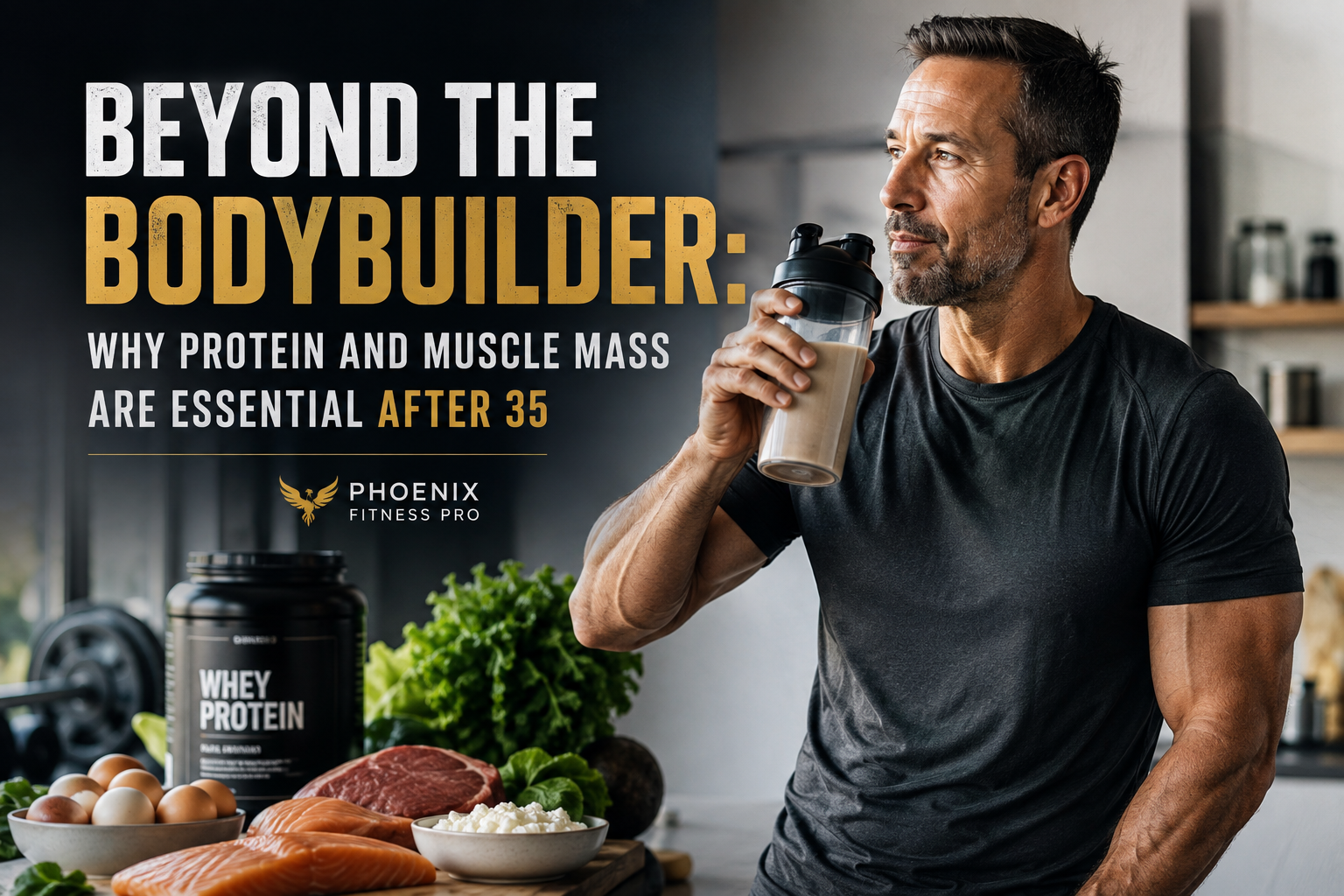
For decades, resistance training and protein supplements carried a single, stubborn stereotype: they were viewed as tools exclusively for twenty-something bodybuilders trying to add bulk.
This narrow perception has caused millions of adults—particularly those over 35—to miss out on the most powerful, evidence-based strategy for health, metabolic resilience, and longevity.
Building muscle and consuming sufficient protein are not about getting "bulky." They are about preserving physical independence, protecting your metabolic health, and supporting vital biological functions as your body ages.
1. Misconception #1: "If I Lift Heavy or Drink Whey, I’ll Get Too Big"
One of the most persistent fears, especially among women and older adults, is that strength training or using protein powder will cause accidental bulk.
Hypertrophy (building large muscle mass) requires years of deliberate, high-volume resistance training, a substantial caloric surplus, and high levels of circulating anabolic hormones.
WHAT PROTEIN & STRENGTH ACTUALLY DO AFTER 35
When you incorporate strength training and protein powder into a balanced diet, you aren't adding bulk—you are building a metabolic shield.
Preserve Lean Soft Tissue: Protects against age-related muscle loss (sarcopenia*).
* Strengthen Bone Matrix: Triggers osteoblast activation to build bone mineral density.
* Support Immune Function: Provides essential amino acids for antibodies and enzymatic activity.
* Improve Glycemic Control: Enhances insulin sensitivity and clears blood glucose.
When you incorporate strength training and protein powder into a balanced diet... When you incorporate strength training and protein powder into a balanced diet, you aren't adding bulk—you are building a metabolic shield that keeps your body functional, lean, and resilient.
2. Protein’s Hidden Roles: It’s Not Just for Muscle Repair
Protein is often discussed strictly in terms of post-workout recovery. In reality, amino acids (the building blocks of protein) are required for nearly every systemic process in the human body:
Immune Defense: Antibodies and immune cells rely directly on amino acids to mount effective responses against pathogens.
Enzymatic and Hormonal Balance: Digestive enzymes, peptide hormones, and neurotransmitters are synthesized from dietary protein.
Tissue Integrity: Skin, hair, nails, tendons, and connective tissues depend on consistent protein intake for structural maintenance.
Satiety and Blood Sugar Regulation: Protein is the most satiating macronutrient, helping stabilize blood glucose levels and reduce cravings throughout the day.
🥩 Muscle & Collagen Support Essentials Support tissue repair, collagen synthesis, and joint health alongside your resistance training program: Grass-Fed Collagen Peptides: Support joint cartilage, tendon integrity, and skin elasticity with Vital Proteins Unflavored Grass-Fed Collagen Peptides or Sports Research Collagen. Heavy Fabric Resistance Loop Bands: Perform joint-friendly hypertrophy training at home without heavy joint stress using Heavy Duty Fabric Resistance Bands. As an Amazon Associate, Phoenix Fitness Pro earns from qualifying purchases.
3. Why the Rules Change After Age 35: Anabolic Resistance
Starting in our mid-thirties, two physiological changes accelerate:
Sarcopenia: The body naturally begins losing approximately 3% to 8% of its skeletal muscle mass per decade if active resistance stimulus is absent.
Anabolic Resistance: Aging muscle tissue becomes less responsive to small doses of amino acids.
While a 20-year-old might easily stimulate muscle protein synthesis with 15 grams of protein, an adult over 35 often requires 30 to 40 grams of high-quality protein per meal (rich in essential amino acids like leucine) to trigger that same cellular repair signal.
4. Convenient Protein: Demystifying Protein Powder
Protein powder is not an artificial chemical compound; it is simply a convenient, concentrated whole-food derivative.
Whey Protein: Isolated from milk during the cheesemaking process, whey provides a highly bioavailable amino acid profile that digests quickly.
Plant-Based Blends: Options combining pea, rice, or pumpkin seed protein deliver complete amino acid profiles for those avoiding dairy.
For busy adults or anyone with reduced appetite, a clean protein powder is simply a practical way to meet daily nutrient targets without cooking extra meals.
Take Charge of Your Longevity with Phoenix Fitness Pro
Strength and adequate protein intake are the cornerstone of aging gracefully:
Track Your Protein Distribution: Ensure every meal provides at least 30 grams of protein to overcome age-related anabolic resistance.
Log Your Strength Progress: Track your progressive resistance workouts on Phoenix Fitness Pro to keep your muscles and bones adapting week after week.
Take control of your functional strength and health span today at www.phoenixfitnesspro.com.
Scientific References
- Dietary protein recommendations and the prevention of sarcopenia. Current opinion in clinical nutrition and metabolic care, 2009.
- Evidence-based recommendations for optimal dietary protein intake in older people: a position paper from the PROT-AGE Study Group. Journal of the American Medical Directors Association, 2013.
Editorial & Scientific Integrity Disclaimer: This article is for informational and educational purposes only and does not constitute medical advice. Always consult a qualified healthcare professional before starting any supplement regimen or dietary change. All physiological and nutritional claims are referenced against primary clinical research (PubMed/NIH) throughout the text. Some links on this page may be affiliate links.
Written by Phoenix Wellness Team
The Phoenix Fitness Pro team researches every article against current evidence and real member experience so you get practical guidance, not hype.
Learn more about Phoenix Fitness Pro