
Warm Lemon Water with Salt: Morning Benefits
Written by John Solomou | Founder, Phoenix Wellness Team
Researched & Fact-CheckedPeer-Reviewed Clinical Literature (PubMed / NIH / ISSN)
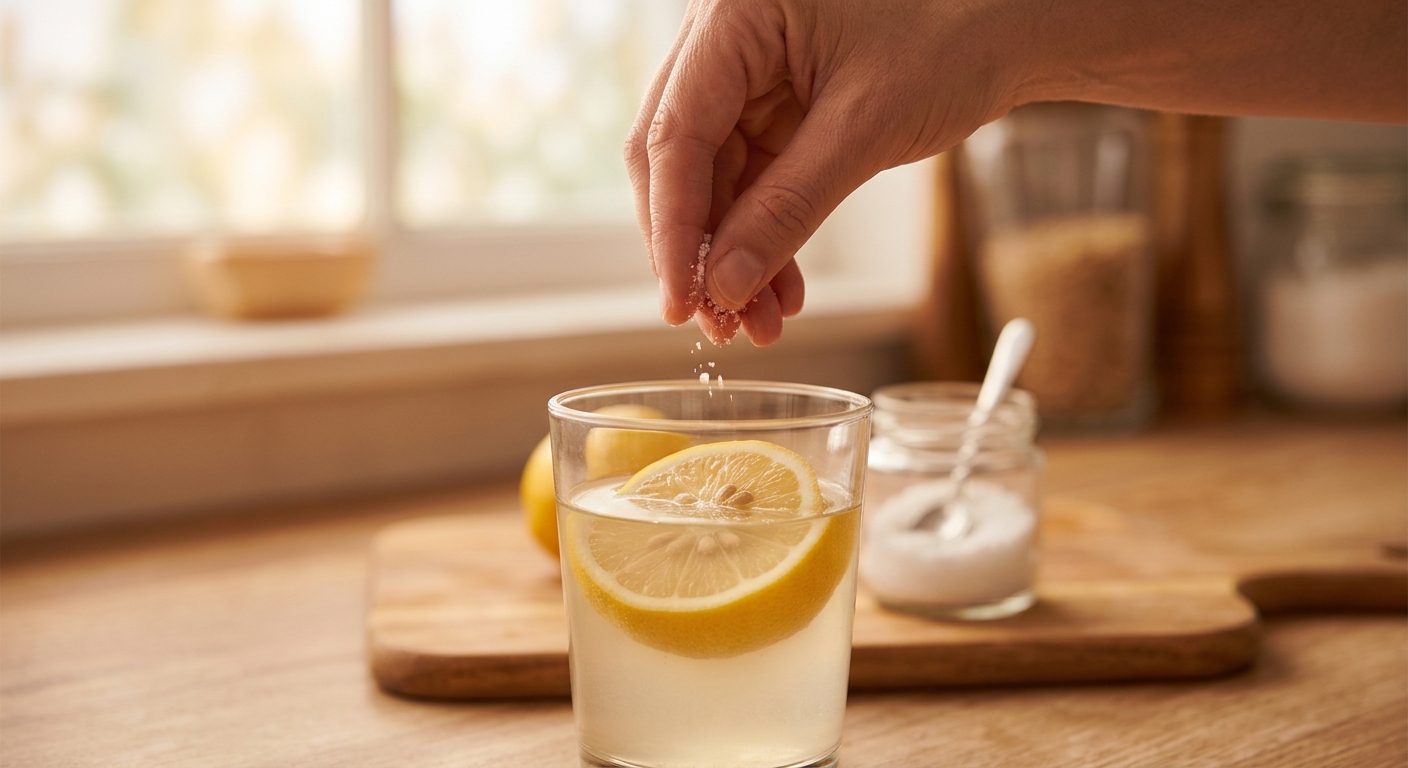
By the time you open your eyes, you have already gone six to nine hours without a sip of water. A glass of warm water with the juice of half a lemon and a quarter teaspoon of salt, about 575 mg of sodium, replaces that overnight fluid loss faster than plain water and primes your system before coffee or a morning workout. The habit takes under a minute. The physiology behind it is worth understanding before you add it to your routine.
What Happens While You Sleep
You lose fluid every night through breathing and skin, even without heavy sweat. Researchers who tracked elite athletes across a training camp found real swings in body mass and urine concentration from one morning to the next, which means waking hypohydration is measurable, not just a marketing phrase (Vescovi & Watson, 2019). You wake up on the dry side of normal, and your first beverage choice either closes that gap or leaves most of it in place.
Plain water rehydrates you, but your kidneys clear a share of it fast when there is nothing to hold the fluid in your tissues. Sodium changes that equation. A 2021 review in Nutrients measured how different drinks compare for fluid retention and found that beverages containing sodium keep more water in the body over time than sodium-free water does (Millard-Stafford et al., 2021). That is the entire case for the pinch of salt: it is not about taste, it is about what your body does with the liquid after you swallow it.
The Ingredient Breakdown
| Ingredient | Amount | What It Provides | Why It Matters |
|---|---|---|---|
| Filtered water | 16-20 oz, warm | Base fluid volume | Replaces overnight respiratory and insensible losses |
| Sea salt or Himalayan salt | 1/4 tsp (~575 mg sodium) | Sodium, trace potassium and magnesium | Helps your body retain the fluid instead of flushing it out |
| Fresh lemon juice | Half a lemon (~10-12 mg vitamin C) | Vitamin C, citric acid, flavor | Makes plain salted water easy to drink every day |
Consistency drives the benefit here, not any single ingredient acting alone.
Sodium and Exercise Performance
If you train before work, sodium status matters more than most people realize. The American College of Sports Medicine's position stand on fluid replacement states that sodium in a pre-exercise drink helps maintain plasma volume and reduces the urine losses that come from drinking plain water alone (Sawka et al., 2007). Earlier work from Shirreffs and Maughan reached the same conclusion while studying post-exercise rehydration: sodium intake is the single biggest factor in how much fluid your body keeps after you drink it (Shirreffs & Maughan, 1997).
None of this requires a sports drink loaded with sugar. A pinch of salt in water accomplishes the same retention mechanism without the 20-plus grams of added sugar that many commercial products carry.
The Caffeine Question
Coffee and cortisol are connected, and no amount of morning hydration changes that relationship. Lovallo and colleagues measured cortisol responses to caffeine across the day and confirmed that caffeine raises cortisol output, independent of other factors (Lovallo et al., 2005). Drinking salted lemon water first does not cancel caffeine's effect on your stress hormones.
It separates two different problems instead. Mild dehydration on its own is linked to worse mood and reduced cognitive performance, according to a broad review of hydration research (Popkin, D'Anci & Rosenberg, 2010). Fixing that problem before you add caffeine means you are not asking one cup of coffee to solve a hydration deficit and wake you up at the same time. Give the water 15 to 20 minutes to absorb before your first cup.
The Dental Trade-Off Nobody Mentions
Lemon juice is acidic, with a pH low enough to soften tooth enamel on contact. Research on citrus juice and enamel has shown measurable erosion with frequent, prolonged exposure (de Melo et al., 2015, studying orange juice, which sits in a similar pH range to lemon). This is not a reason to skip the habit, but it is a reason to do it smart: drink it through a straw when you can, rinse your mouth with plain water afterward, and wait 30 minutes before brushing, since brushing right after an acid exposure can abrade softened enamel.
Your 5-Step Morning Protocol
- Fill a glass with 16-20 oz of warm filtered water as soon as you wake up, before checking your phone.
- Dissolve 1/4 teaspoon of sea salt or Himalayan salt into the water and stir until it disappears.
- Squeeze the juice of half a fresh lemon into the glass.
- Drink the full glass within 5 minutes, through a straw if you have one, to protect your enamel.
- Wait 20-30 minutes before coffee, food, or training, then log the habit so you can see your consistency build over time.
Build this habit into a full morning routine with the Phoenix Hydration Calculator to find your personal fluid target, then track how consistent mornings affect your Daily Readiness Score.
Common Questions
Does lemon water burn fat or boost your metabolism? No. There is no evidence that lemon juice increases fat oxidation or raises metabolic rate. The value here is hydration and sodium repletion, not a metabolic effect.
Does the water need to be warm? No. Warm water is a comfort preference, not a physiological requirement. Cold or room-temperature water with the same salt and lemon content delivers the same hydration and sodium benefit.
Is a quarter teaspoon of salt safe every day? A quarter teaspoon once a day fits within a normal sodium intake for most healthy adults. If you manage high blood pressure, kidney disease, or follow a sodium-restricted diet, talk to your doctor before adding this habit, since your safe sodium range differs from a general guideline.
Can this replace a sports drink during a long workout? No. This is a baseline morning habit, not a replacement for carbohydrate and electrolyte intake during training sessions longer than 60-90 minutes or in heavy heat. Those sessions call for ongoing fluid and sodium replacement, not a single morning glass.
Will this hurt my teeth over time? Frequent, undiluted citrus exposure can soften enamel. Using a straw, rinsing with plain water afterward, and waiting before brushing cuts that risk by a wide margin.
Scientific References
- Sawka MN, Burke LM, Eichner ER, et al. American College of Sports Medicine position stand: Exercise and fluid replacement. Medicine and Science in Sports and Exercise, 2007.
- Shirreffs SM, Maughan RJ. Factors influencing the restoration of fluid and electrolyte balance after exercise in the heat. British Journal of Sports Medicine, 1997.
- Millard-Stafford M, Snow TK, Jones ML, Suh H. The Beverage Hydration Index: Influence of Electrolytes, Carbohydrate, and Protein. Nutrients, 2021.
- Popkin BM, D'Anci KE, Rosenberg IH. Water, hydration, and health. Nutrition Reviews, 2010.
- Lovallo WR, Whitsett TL, al'Absi M, et al. Caffeine stimulation of cortisol secretion across the waking hours in relation to caffeine intake levels. Psychosomatic Medicine, 2005.
- Vescovi JD, Watson G. Variability of body mass and urine specific gravity in elite male field hockey players during a pre-Olympic training camp. International Journal of Sport Nutrition and Exercise Metabolism, 2019.
- de Melo MA, Passos VF, Lima JP, et al. Erosive potential of processed and fresh orange juice on human enamel. Journal of Dentistry for Children, 2015.
Editorial & Scientific Integrity Disclaimer: This article is for informational and educational purposes only and does not constitute medical advice. Always consult a qualified healthcare professional before starting any supplement regimen or dietary change. All physiological and nutritional claims are referenced against primary clinical research (PubMed/NIH) throughout the text. Some links on this page may be affiliate links.
Written by John Solomou
John Solomou is the founder of Phoenix Fitness Pro, a personalized fitness and wellness platform for adults 35+. He built it after a heart-health wake-up call, and his writing focuses on sustainable habits, real-world nutrition, and training that fits into a busy life — not the perfect influencer life.
Learn more about Phoenix Fitness Pro