
The Wellness Habit Tracker Guide: Why Most Apps Fail (and What Actually Works)
Written by John Solomou | Founder, Phoenix Wellness Team
Researched & Fact-CheckedPeer-Reviewed Clinical Literature (PubMed / NIH / ISSN)
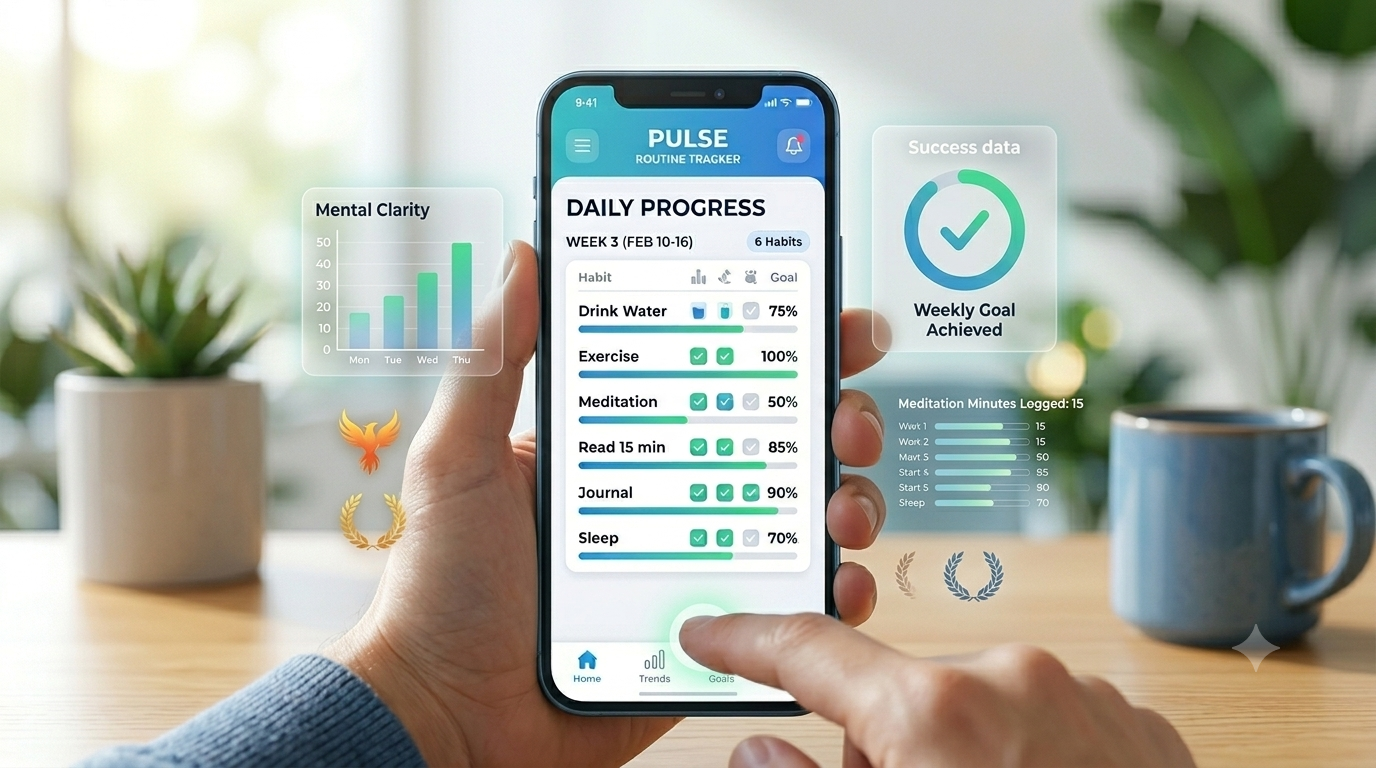
We’ve all been there. You download a beautifully designed new productivity app, spend an hour configuring twenty different daily routines, and resolve that today is the day everything changes. You vow to drink 100 ounces of water, meditate for twenty minutes, read thirty pages, hit the gym, and avoid processed foods.
For three days, you feel like a machine. On day four, life gets chaotic. You miss a couple of checkmarks. By day seven, looking at the app doesn't inspire you—it fills you with a subtle, nagging sense of guilt. So, you delete the app and slide right back into your old routines.
The problem isn't your willpower. The problem is the fundamental design of modern habit architecture.
The Problem with Most Habit Trackers
Most apps in this space are built on the assumption that more data and stricter rules lead to better behavior. They treat human beings like cold algorithms that just need better programming, burying users under a mountain of dozens of microscopic metrics to manage every single day.
When an application forces you to micromanage twenty different things at once, it introduces massive cognitive friction. Instead of focusing your energy on performing a behavior, you spend your mental bandwidth just trying to keep up with a chaotic checklist. True discipline isn't built on rigid, overwhelming tracking—it's built on singular, focused progression.
What Actually Works
If overwhelming checklists and rigid tracking don't drive lasting change, what does? Decades of psychological research point to a more streamlined, intentional framework. To build routines that actually stick, you need to shift from micro-management to milestone consistency.
1. One Day, One Focus: The Power of Single Milestones
In behavioral psychology, trying to rewrite your entire life overnight is a guaranteed recipe for ego depletion. True transformation happens when you isolate your focus.
Instead of tracking 20 habits poorly, the most effective strategy is to conquer one key daily milestone at a time. By focusing your entire day's energy on winning a single, highly intentional keystone action—like hitting your structural nutritional baseline or completing a daily movement goal—you build immense momentum without the cognitive burnout.
2. Gamifying with Purpose: Earning Meaningful Wins
There is a massive psychological difference between a fragile digital "streak" that punishes you by resetting to zero, and an earned badge system that permanently cements your progress.
When you track progress through milestone badges, your brain views those achievements as permanent identity shifts. You aren't just trying to keep a fragile number alive; you are actively collecting tokens of your real-world growth. Celebrating a clean daily win with visual rewards releases a dopamine hit that reinforces the behavior, transforming habit formation from an exhausting chore into a rewarding journey.
3. Structured Progress Over Infinite Timelines
Human beings thrive when there is a clear finish line. An infinite checklist feels exhausting because it never ends. However, breaking your transformation down into a structured, time-bound roadmap completely changes how your brain processes consistency.
A structured timeline allows you to focus purely on the day right in front of you while trusting a larger, proven system to guide you toward a total lifestyle reset.

Shifting the Paradigm
If you want to break the cycle of starting and stopping, you have to stop using tools designed to overwhelm you. Lasting wellness isn't built on flawless, 20-step rigid perfection; it’s built on focused daily wins.
By narrowing your focus to a single core daily milestone, celebrating your victories with earned rewards, and following a structured journey, you create a system that actually builds long-term momentum.
Step away from the overwhelming checklists, stop judging your past, and start mastering your daily patterns. True change happens one day, one focus, and one earned milestone at a time.
Scientific References
- What Makes a Habit? Investigating Potential Determinants of Habits. Health psychology review, 2026.
- Effective techniques in healthy eating and physical activity interventions: a meta-regression. Health psychology, 2009.
Editorial & Scientific Integrity Disclaimer: This article is for informational and educational purposes only and does not constitute medical advice. Always consult a qualified healthcare professional before starting any supplement regimen or dietary change. All physiological and nutritional claims are referenced against primary clinical research (PubMed/NIH) throughout the text. Some links on this page may be affiliate links.
Written by Phoenix Wellness Team
The Phoenix Fitness Pro team researches every article against current evidence and real member experience so you get practical guidance, not hype.
Learn more about Phoenix Fitness Pro