
The Science of Hyperbaric Oxygen Therapy (HBOT): Benefits, Recovery, and Home Chambers
Written by John Solomou | Founder, Phoenix Wellness Team
Researched & Fact-CheckedPeer-Reviewed Clinical Literature (PubMed / NIH / ISSN)
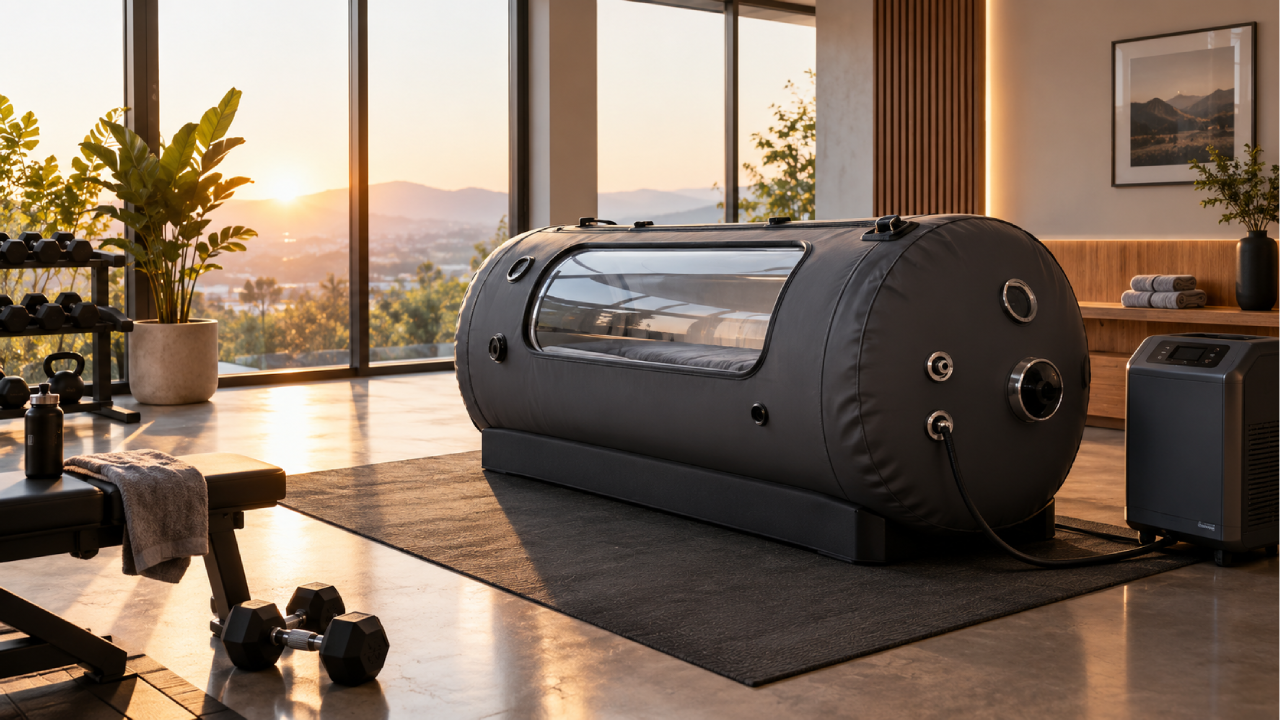
The Science of Hyperbaric Oxygen Therapy (HBOT): Benefits, Recovery, and Home Chambers
Hyperbaric oxygen therapy (HBOT) can increase oxygen exposure to tissues, but its benefits for healthy adults and exercise recovery are more limited than many online claims suggest. The strongest evidence supports specific medical uses, while research on athletic recovery, cognition, and mild home chambers is still developing.
HBOT combines increased atmospheric pressure with breathing oxygen at a higher concentration than normal air. The increased pressure can substantially raise the amount of oxygen dissolved in plasma.
That does not mean every home chamber produces the same physiological effect as clinical HBOT. Pressure, oxygen concentration, treatment duration, equipment design, and the treatment protocol all matter.
For adults 35 and older who train regularly, the useful question is not simply whether HBOT sounds promising. It is whether the specific treatment being considered has evidence for the outcome you want.
What Is Hyperbaric Oxygen Therapy?
At sea level, atmospheric pressure is approximately 1.0 ATA, or atmosphere absolute. HBOT raises the pressure around the body while the person breathes oxygen inside a chamber.
Clinical HBOT generally involves breathing near-100% oxygen while the chamber is pressurized above normal atmospheric pressure. The combination increases the partial pressure of oxygen and allows substantially more oxygen to dissolve in plasma.
This is different from simply breathing supplemental oxygen at normal atmospheric pressure.
How Henry's Law Applies
Henry's law describes how the amount of gas dissolved in a liquid increases as the partial pressure of that gas rises.
During hyperbaric oxygen treatment, the increased oxygen pressure can increase the amount of oxygen dissolved in plasma. That oxygen-rich plasma can reach tissues where blood flow may be limited.
The physiological effects of HBOT involve more than oxygen delivery. Research has examined changes involving oxidative signaling, inflammation, blood-vessel signaling, and cellular responses. These mechanisms are biologically plausible, but a physiological mechanism does not automatically mean that a person will experience a meaningful improvement in recovery, performance, or health. (PubMed)
What Does the Research Say About HBOT and Exercise Recovery?
The evidence is promising in some areas but far from conclusive.
A 2026 systematic review and meta-analysis included 10 randomized controlled trials involving 299 participants with exercise-induced muscle injury or soreness. The analysis found that HBOT significantly improved measures of exercise-induced muscle injury.
However, the same analysis found no significant overall improvement in exercise-induced muscle soreness. That distinction matters because muscle-damage markers and the way a person feels after training are not the same outcome. (PubMed)
An earlier systematic review and meta-analysis included 10 studies with 166 participants and examined HBOT before, during, or after exercise. The authors concluded that the evidence was insufficient to establish a clear benefit for athletic recovery, partly because the studies were small and used different treatment protocols. (PubMed)
A separate 2026 systematic review and meta-analysis focused on athletic recovery found evidence for some physiological effects, including reductions in post-exercise blood lactate, but the available research remains limited and treatment protocols vary. (PubMed)
The practical takeaway is straightforward:
HBOT may help some aspects of exercise recovery, but current evidence does not justify promising faster recovery, less soreness, or better athletic performance for everyone.
HBOT and Muscle Recovery
The idea behind using HBOT after hard training is reasonable. Exercise creates temporary changes in muscle tissue, blood flow, inflammatory signaling, and metabolic markers.
HBOT can alter tissue oxygenation and several biological pathways involved in repair. Human studies have also reported changes in markers associated with muscle injury following treatment.
For example, a randomized study of athletes with exercise-related muscular injury found improvements in several blood markers associated with muscle damage after a series of HBOT sessions. However, it was a relatively small study involving athletes with exercise-related injuries rather than a large trial of healthy adults performing normal resistance training.
The newer meta-analysis provides stronger evidence because it combines multiple randomized trials. Even so, the studies varied in pressure, treatment duration, exercise protocols, and outcome measures. (PubMed)
For normal gym soreness, HBOT should therefore be considered an optional recovery strategy rather than a replacement for the fundamentals:
Adequate protein and total calorie intake Sufficient sleep Appropriate training volume Rest between hard sessions Hydration Gradual progression rather than excessive training loads
Does HBOT Increase Blood Vessel Formation?
One reason HBOT attracts attention in recovery research is its effect on signaling pathways involved in angiogenesis, which is the formation of new blood vessels.
A systematic review of human studies found that HBOT can influence inflammatory and angiogenic signaling, including changes in growth factors and cytokines associated with blood-vessel formation. The authors also emphasized that more research is needed to determine what these biological changes mean for clinical outcomes. (PubMed)
This distinction matters.
A change in an angiogenic marker is not the same thing as proving that a healthy person will grow enough new blood vessels to improve muscle recovery or athletic performance.
Research supports biological effects involving inflammation and angiogenesis. The real-world benefit for healthy adults remains less certain. (PubMed)
Does HBOT Mobilize Stem Cells?
There is also evidence that HBOT can temporarily increase circulating CD34-positive stem and progenitor cells.
A controlled human study found that a single two-hour exposure to 2.0 ATA oxygen approximately doubled circulating CD34-positive cells. After 20 treatments, the researchers reported an approximately eightfold increase. The study also included animal experiments examining the nitric oxide pathway involved in the response. (PubMed)
This finding is interesting, but it should not be turned into a claim that HBOT sends stem cells around the body to repair damaged organs, joints, or muscles.
The study demonstrated stem and progenitor cell mobilization. It did not establish that routine home HBOT produces whole-body regeneration or that the mobilized cells produce a specific health benefit in healthy adults.
It is also important to note that the study used 2.0 ATA oxygen. That protocol should not automatically be applied to a low-pressure home chamber.
Can HBOT Improve Cognitive Function?
There is some human evidence, but it comes from a population that does not directly match most Phoenix Fitness Pro readers.
A randomized controlled trial involving 63 healthy adults older than 64 found improvements in global cognitive function, attention, and information-processing speed after a three-month HBOT protocol. Brain imaging also showed increases in cerebral blood flow in several brain regions. (PubMed)
This is a legitimate finding, but it should not be interpreted as proof that a healthy person in their 40s will experience better focus after a few HBOT sessions.
The study population was adults over 64, and the treatment protocol was substantially more involved than an occasional home recovery session.
For adults in their 30s, 40s, and 50s, the evidence for cognitive enhancement is less direct.
Clinical HBOT vs. Mild Home Chambers
This is one of the most important distinctions to understand before buying a chamber.
Not every pressurized chamber qualifies as clinical HBOT.
The Undersea and Hyperbaric Medical Society defines clinical hyperbaric oxygen therapy as breathing near-100% oxygen while inside a chamber pressurized to at least 1.4 ATA. UHMS specifically distinguishes low-pressure fabric chambers, commonly marketed as mild hyperbaric therapy, from clinical HBOT. It states that it is not aware of reliable clinical evidence establishing therapeutic effects from compression below 1.4 ATA. (UHMS)
That does not mean every mild hyperbaric chamber is necessarily useless. It means the evidence and terminology need to be handled carefully.
OXYNOVA, for example, describes its soft chambers as mild hyperbaric oxygen systems operating below 1.4 ATA, with current models such as the OXYNOVA 8 and OXYNOVA 9 listed at 1.3 ATA. (OXYNOVA)
A Practical Comparison
| Feature | Mild Home Chamber | Clinical HBOT |
|---|---|---|
| Pressure | Often below 1.4 ATA | At least 1.4 ATA under UHMS definition |
| Oxygen | Depends on the system | Near-100% oxygen in clinical HBOT |
| Setting | Home or wellness environment | Medical or specialized facility |
| Evidence | Limited for many wellness claims | Established for specific medical indications |
| Supervision | Varies by device and provider | Clinical protocols and trained personnel |
The distinction is important when evaluating a home chamber.
A 1.3 ATA mild hyperbaric chamber should not be marketed as though it provides exactly the same treatment as a medical HBOT chamber operating at higher pressure with near-100% oxygen.
Considering an OXYNOVA Home Chamber?
If you are specifically researching a mild hyperbaric chamber for home use, OXYNOVA is one option to investigate.
OXYNOVA currently lists portable soft chambers operating at 1.3 ATA, including its Serie 8 and Serie 9 models. The company positions these systems for home, wellness, sports, and professional settings. (OXYNOVA)
That makes OXYNOVA relevant to readers interested in mild hyperbaric recovery, but the product's specifications should not be confused with the evidence for clinical HBOT at higher pressures.
Considering a home chamber? You can explore OXYNOVA's hyperbaric chamber options and review the specifications, pressure rating, oxygen-delivery system, operating instructions, and safety requirements for the specific model you are considering.
Phoenix Fitness Pro is an OXYNOVA affiliate, which means Phoenix may earn a commission if you purchase through the link.
The affiliate relationship does not change the scientific limitations discussed in this article. A product recommendation should be evaluated separately from the evidence for HBOT as a therapy.
How Often Should You Use HBOT?
There is no scientifically established universal HBOT schedule for healthy adults trying to improve recovery.
Research protocols vary considerably. Some exercise studies have used approximately 60-minute sessions, while others have used longer exposures. The 2026 meta-analysis found beneficial effects on exercise-induced muscle injury across different protocols, but that does not establish one ideal schedule for home use. (PubMed)
A practical approach is to follow the specific manufacturer's instructions for a home device and, when using HBOT for a medical condition, the treatment plan provided by a qualified healthcare professional.
Do not assume that more sessions automatically produce better results.
What Should You Consider Before Using a Home Chamber?
Home use deserves more caution than many online wellness articles suggest.
The FDA issued a 2025 safety communication reminding healthcare providers and facilities about the safe use of HBOT devices. The agency reported serious injuries and deaths associated with HBOT device fires and emphasized following manufacturer instructions, fire-prevention measures, proper grounding, and appropriate training. The FDA also notes that serious adverse events are rare but can occur. (FDA)
Pressure changes can also affect the ears and sinuses.
A 2023 systematic review and meta-analysis of 24 randomized trials involving 1,497 participants found that adverse effects were more common with HBOT than controls. Ear discomfort was the most frequently reported adverse effect, and the analysis found greater adverse-event rates at pressures above 2.0 ATA and with treatment courses longer than 10 sessions. (PubMed)
Before using a home chamber:
Read the complete manufacturer's instructions. Understand the chamber's pressure rating and oxygen-delivery system. Follow all fire and electrical safety requirements. Do not bring prohibited items or electronics into the chamber unless the manufacturer specifically permits them. Learn how to equalize ear pressure before and during compression. Stop if you experience significant ear pain or other concerning symptoms. Ask a qualified healthcare professional whether HBOT is appropriate if you have a medical condition or risk factor that could make pressure or oxygen exposure unsafe. Do not use HBOT as a substitute for treatment of a diagnosed medical condition.
A pulse oximeter can measure peripheral oxygen saturation, but it does not prove that HBOT is producing a particular therapeutic effect. Healthy people typically already have high oxygen saturation while breathing room air, so a higher SpO2 reading does not tell you whether the treatment improved muscle recovery, cognition, or another outcome.
How Does HBOT Fit Into Recovery After 40?
For adults over 35, HBOT is best viewed as an optional recovery technology rather than a foundation of a fitness program.
The fundamentals still have a much larger role:
- Train consistently with appropriate progression.
- Eat enough total calories to support your goal.
- Get adequate protein.
- Sleep enough to recover.
- Manage training volume and rest days.
- Stay hydrated.
- Use specialized recovery tools only after the fundamentals are in place.
If those pieces are already handled, HBOT may be something worth researching with realistic expectations.
If they are not handled, spending money on a chamber is unlikely to compensate for the basics.
Ready to put your nutrition numbers into practice? Use the Phoenix Fitness Pro Protein Calculator to estimate a practical daily protein target based on your body weight and goals.
What Equipment Can Help With Recovery?
HBOT does not require additional fitness equipment, and you do not need a collection of recovery devices to make progress.
If you use other recovery strategies at home, simple equipment such as a foam roller, stretching strap, or yoga mat can support mobility and light recovery work.
These tools are optional. They should complement training, nutrition, sleep, and appropriate recovery rather than replace them.
Questions People Ask
Does HBOT reduce muscle soreness after exercise?
The current evidence does not support a blanket claim that HBOT reduces post-exercise muscle soreness. A 2026 systematic review and meta-analysis found that HBOT improved measures of exercise-induced muscle injury but did not significantly improve muscle soreness overall. (PubMed)
Is a mild home chamber the same as clinical HBOT?
No. Pressure and oxygen concentration can differ substantially. UHMS defines clinical HBOT as near-100% oxygen delivered at a pressure of at least 1.4 ATA and distinguishes low-pressure fabric chambers from clinical HBOT. (UHMS)
Can HBOT improve brain function?
There is some evidence that HBOT can affect cerebral blood flow and cognitive measures, but the strongest study discussed here involved healthy adults older than 64. That makes the evidence less direct for healthy adults in their 30s, 40s, and 50s. (PubMed)
Does HBOT increase stem cells?
A controlled human study found that HBOT increased circulating CD34-positive stem and progenitor cells. That does not prove that routine home HBOT produces whole-body regeneration or a specific recovery benefit. The study used a 2.0 ATA oxygen protocol, so its findings should not automatically be applied to a 1.3 ATA home chamber. (PubMed)
How long should an HBOT session last?
There is no single evidence-based session length for healthy adults using HBOT for general recovery. Research protocols vary, so treatment duration should be based on the specific device, protocol, and professional guidance rather than assuming that longer sessions are better.
Is it safe to use a hyperbaric chamber at home?
Home use carries real safety considerations. The FDA has reported serious injuries and deaths associated with HBOT device fires and recommends following manufacturer safety instructions carefully. Pressure-related ear problems are also a recognized adverse effect. (FDA)
Should I use HBOT instead of normal recovery methods?
No. Sleep, adequate nutrition, appropriate training volume, hydration, and rest should remain the foundation of recovery. HBOT is an optional intervention with evidence that varies depending on the outcome, pressure, oxygen concentration, and treatment protocol.
Scientific References
- Hyperbaric oxygen: its uses, mechanisms of action and outcomes. QJM. PubMed
- Hyperbaric oxygen: its mechanisms and efficacy. Plastic and Reconstructive Surgery. PubMed
- Effects of Hyperbaric Oxygen Therapy on Exercise-Induced Muscle Injury and Soreness: A Systematic Review and Meta-analysis. Archives of Physical Medicine and Rehabilitation. PubMed
- Hyperbaric Oxygen Treatment for Enhancing Athletic Recovery: A Systematic Review and Meta-Analysis. Undersea and Hyperbaric Medicine. PubMed
- The Effects of Hyperbaric Oxygenation on Oxidative Stress, Inflammation and Angiogenesis. Biomolecules. PubMed
- Stem cell mobilization by hyperbaric oxygen. American Journal of Physiology-Heart and Circulatory Physiology. PubMed
- Cognitive enhancement of healthy older adults using hyperbaric oxygen: a randomized controlled trial. Aging. PubMed
- Adverse effects of hyperbaric oxygen therapy: a systematic review and meta-analysis. Frontiers in Medicine. PubMed
- UHMS Position Statement: Low-Pressure Fabric Hyperbaric Chambers. Undersea and Hyperbaric Medical Society. UHMS
Editorial & Scientific Integrity Disclaimer: This article is for informational and educational purposes only and does not constitute medical advice. Always consult a qualified healthcare professional before starting any supplement regimen or dietary change. All physiological and nutritional claims are referenced against primary clinical research (PubMed/NIH) throughout the text. Some links on this page may be affiliate links.
Written by Phoenix Wellness Team
The Phoenix Fitness Pro team researches every article against current evidence and real member experience so you get practical guidance, not hype.
Learn more about Phoenix Fitness Pro