
The pH Reality Check: What Your Body's Acid-Base Balance Actually Means
Written by John Solomou | Founder, Phoenix Wellness Team
Researched & Fact-CheckedPeer-Reviewed Clinical Literature (PubMed / NIH / ISSN)
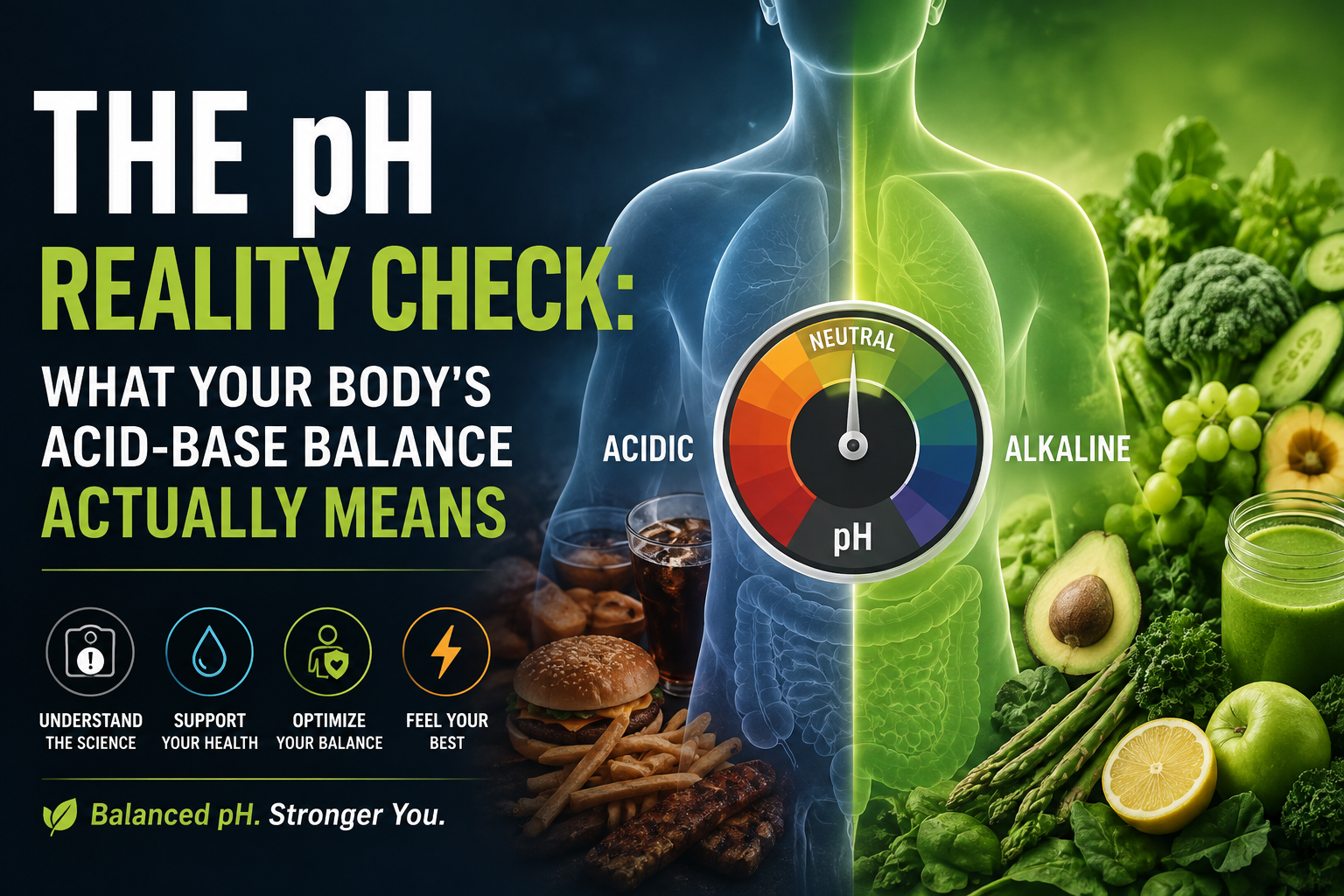
Search the internet for "body pH" and you will find endless claims that changing the water you drink or the food you eat can dramatically shift your body's pH from "acidic" to "alkaline."
The truth is both more complex and far more interesting.
Your body does not have a single universal pH level. Instead, it tightly manages a series of distinct micro-environments—ranging from the extreme acid bath in your stomach to the strictly regulated, slightly alkaline baseline of your blood stream.
Understanding how pH balance works, how to test it accurately, and what happens when your cellular machinery falls out of range is essential for optimizing workout recovery, energy, and long-term vitality.
WHAT IS THE "PERFECT BALANCE"?
pH is a measure of hydrogen ion concentration on a scale from 0 (highly acidic) to 14 (highly alkaline), with 7.0 being neutral. Different parts of your body require drastically different pH environments to function:
THE BODY'S pH SPECTRUM:
Stomach Acid: 1.5 to 3.5 (Breaks down food)
Skin Barrier: 4.7 to 5.7 (Protects against bacteria)
Saliva: 6.5 to 7.5 (Initial digestion)
Arterial Blood: 7.35 to 7.45 (STRICT TARGET ZONE)
Blood pH (7.35 to 7.45): This is the strict gold standard. A drop below 7.35 is clinically called acidosis; a rise above 7.45 is alkalosis. Even minor deviations outside this tight range can denature proteins and disrupt cellular energy (ATP) production.
Stomach pH (1.5 to 3.5): Requires extreme acidity to activate digestive enzymes like pepsin and kill ingested pathogens.
Skin pH (4.7 to 5.7): Known as the "acid mantle," this mild acidity maintains the skin barrier and keeps harmful microbes at bay.
HOW TO TEST YOUR pH (AND WHAT THE RESULTS MEAN)
When tracking pH at home, clarity on what you are testing is key:
At-Home Urine & Saliva Strips:
What They Measure: Test strips measure the pH of excreted fluids, not your internal blood pH. If you want to check your daily readings at home, you can pick up a pack of pH test strips on Amazon here: pH Test Strips.
Saliva (Ideal: 6.5 to 7.5): Reflects digestive readiness and overall hydration. Best tested first thing in the morning before eating or brushing teeth.
Urine (Ideal: 6.0 to 7.0): Fluctuates throughout the day depending on diet, training intensity, and hydration. Acidic urine often simply indicates that your kidneys are doing their job—excreting excess metabolic waste and hydrogen ions to keep your internal blood pH stable.
Clinical Blood Tests (ABG - Arterial Blood Gas):
What They Measure: Direct measurement of arterial blood pH, oxygen, and carbon dioxide levels. Used in clinical settings to assess respiratory and kidney function.
WHAT HAPPENS WHEN pH BALANCE STRAYS?
When the body's internal buffering systems are overworked—due to extreme physiological stress, poor recovery, respiratory issues, or underlying conditions—imbalances manifest as acidosis or alkalosis.
Too Low (Acidosis: Excess Acid / Low pH): Under severe stress or intense anaerobic exercise, hydrogen ions build up faster than the body can clear them.
Symptoms: Persistent muscle fatigue, brain fog, shallow or rapid breathing, joint stiffness, and impaired cellular energy output.
Exercise Impact: Lactic acid dissociates into lactate and hydrogen ions. It is the accumulation of hydrogen ions—lowering muscle tissue pH—that causes that familiar "burn" and temporary loss of muscle power during intense lifting sets.
Too High (Alkalosis: Excess Alkali / High pH): Less common in daily training, alkalosis typically occurs from hyperventilation (exhaling too much CO2) or severe fluid and electrolyte loss.
Symptoms: Muscle twitching, numbness or tingling in extremities, muscle cramps, dizziness, and nausea.
Exercise Impact: High blood pH alters calcium binding in the blood, leading to involuntary muscular spasms and reduced power output.
WHY YOUR BODY FIGHTS TO MAINTAIN BALANCE
Your body relies on three key mechanisms to keep internal pH balanced:
Chemical Buffers (Seconds): Bicarbonate and phosphate systems in the blood immediately neutralize excess acids or bases.
The Lungs (Minutes): Breathing out carbon dioxide (CO2, an acidic precursor) raises blood pH. Breathing faster during hard workouts is your body's primary way to offload acid.
The Kidneys (Hours to Days): The kidneys excrete or reabsorb hydrogen and bicarbonate ions through urine to fine-tune long-term balance.
OPTIMIZE YOUR METABOLIC RESILIENCE WITH PHOENIX FITNESS PRO
While diet alone does not change blood pH, proper hydration, nutrient-dense foods, and smart recovery strategies support your kidneys, lungs, and muscle tissue in clearing exercise-induced metabolic strain.
With Phoenix Fitness Pro (www.phoenixfitnesspro.com):
Track Recovery Metrics: Monitor heart-rate variability (HRV) and sleep to ensure your nervous system is balanced after high-intensity training.
Balance Your Nutrition: Log your daily food intake and electrolyte balance to supply the raw minerals (like potassium, magnesium, and sodium) required for cellular buffering.
Take control of your training recovery and metabolic health at www.phoenixfitnesspro.com.
Scientific References
- Long-term high urinary potential renal acid load and low nitrogen excretion predict reduced diastolic blood pressure and increased arterial stiffness. Journal of hypertension, 2011.
- Diet, evolution and aging--the pathophysiologic effects of the post-agricultural inversion of the potassium-to-sodium and base-to-chloride ratios in the human diet. European journal of nutrition, 2001.
Editorial & Scientific Integrity Disclaimer: This article is for informational and educational purposes only and does not constitute medical advice. Always consult a qualified healthcare professional before starting any supplement regimen or dietary change. All physiological and nutritional claims are referenced against primary clinical research (PubMed/NIH) throughout the text. Some links on this page may be affiliate links.
Written by Phoenix Wellness Team
The Phoenix Fitness Pro team researches every article against current evidence and real member experience so you get practical guidance, not hype.
Learn more about Phoenix Fitness Pro