
Preserving the Organ of Longevity: The Science of Muscle Mass, Bone Density, and Lifespan
Written by John Solomou | Founder, Phoenix Wellness Team
Researched & Fact-CheckedPeer-Reviewed Clinical Literature (PubMed / NIH / ISSN)
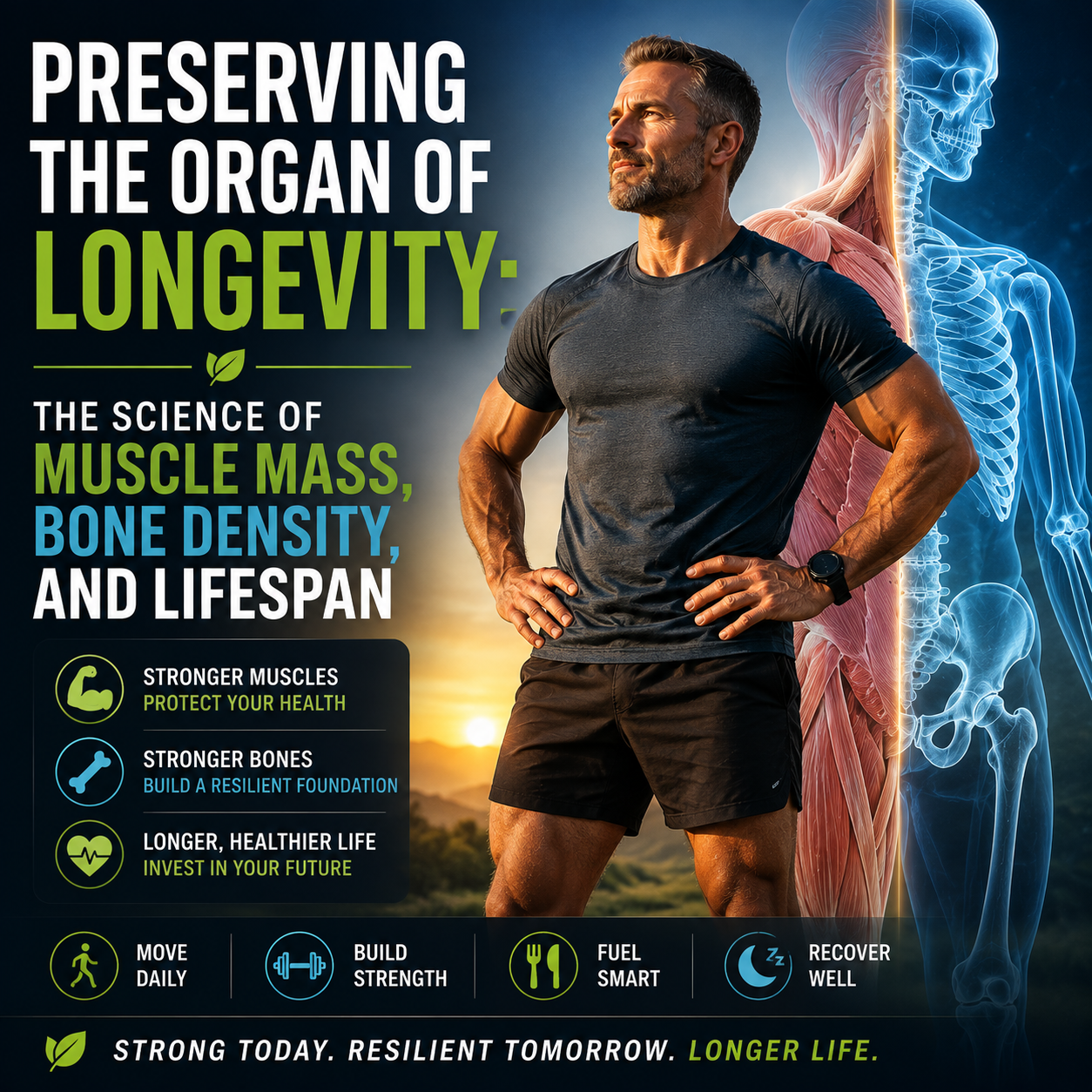
For decades, fitness media evaluated strength training purely through an aesthetic lens: bigger biceps, lower body fat, or a sharper physique for summer.
A major shift in exercise physiology reframes resistance training not as a cosmetic pursuit, but as a non-negotiable longevity strategy.
A landmark 2026 study published in the British Journal of Sports Medicine tracked long-term resistance training across decades. The findings revealed that consistent, moderate strength training (around 90 to 120 minutes per week) was associated with a 13% lower risk of all-cause mortality, a 19% lower risk of cardiovascular death, and a 27% lower risk of neurological disease mortality.
Muscle is no longer viewed as decorative tissue—it is an active metabolic organ.
1. Muscle as a Metabolic Sink
Skeletal muscle acts as the body's primary storage site for glucose. Every time you lift weights, your muscles clear sugar from your bloodstream independently of insulin via GLUT4 protein transporters.
As we age, natural age-related muscle loss (sarcopenia) reduces this metabolic cushion. Losing muscle mass increases the risk of insulin resistance, systemic inflammation, and metabolic dysfunction. Maintaining lean muscle ensures your body retains a high metabolic capacity well into your later decades.
2. Fighting Osteopenia and Protecting Joint Integrity
Muscle strength directly correlates with bone health. When you perform compound movements like squats, hinges, pushes, and pulls, the mechanical tension pulls against bone matrix structures.
This mechanical stress signals bone-building cells (osteoblasts) to lay down new mineral density, protecting against osteopenia and osteoporosis. Furthermore, strengthening the tendons, ligaments, and stabilizing muscles surrounding major joints preserves physical independence and drastically reduces fall risk—one of the leading causes of long-term disability in older adults.
3. The Longevity "Sweet Spot": Quality Over Extreme Volume
You do not need to spend two hours in the gym six days a week to capture the longevity benefits of strength training.
Recent clinical syntheses, including updated guidance from the American College of Sports Medicine (ACSM), highlight a practical, effective threshold:
Frequency: 2 to 3 full-body sessions per week.
Duration: 30 to 60 minutes per session (accumulating ~90–120 total weekly minutes).
Intensity: Heavy enough to challenge the target muscles while leaving 2 to 3 reps in reserve (RIR), rather than training to absolute failure on every set.
Movement Patterns: Prioritize major multi-joint patterns:
Squat / Lunge (Legs)
Hip Hinge (Posterior Chain)
Upper Body Push (Chest/Shoulders)
Upper Body Pull (Back/Lats)
Loaded Carry / Core Stability
4. Complementing Aerobic Base with Resistance
While strength training builds structural and metabolic resilience, combining it with low-intensity aerobic conditioning (Zone 2 cardio) provides maximum protection. Research consistently demonstrates that individuals who perform both resistance training and aerobic exercise achieve the highest reductions in all-cause mortality—up to 45% lower risk compared to sedentary peers.
Optimize Your Strength with Phoenix Fitness Pro Building sustainable, age-defying muscle requires consistency and tracking:
Log Your Progressive Overload: Track your resistance, rep ranges, and sets to ensure your tissues adapt over time without overtraining.
Balance Training Strain and Recovery: Monitor your volume alongside daily recovery targets to ensure your nervous system recharges effectively between sessions.
Take control of your strength and long-term health today at www.phoenixfitnesspro.com.
Scientific References
- Muscle mass index as a predictor of longevity in older adults. The American journal of medicine, 2014.
- The underappreciated role of muscle in health and disease. The American journal of clinical nutrition, 2006.
Editorial & Scientific Integrity Disclaimer: This article is for informational and educational purposes only and does not constitute medical advice. Always consult a qualified healthcare professional before starting any supplement regimen or dietary change. All physiological and nutritional claims are referenced against primary clinical research (PubMed/NIH) throughout the text. Some links on this page may be affiliate links.
Written by Phoenix Wellness Team
The Phoenix Fitness Pro team researches every article against current evidence and real member experience so you get practical guidance, not hype.
Learn more about Phoenix Fitness Pro