
PART 2: Optimizing Your pH Buffer: How Exercise, Breathing, and Nutrition Impact Cellular Acid-Base Balance
Written by John Solomou | Founder, Phoenix Wellness Team
Researched & Fact-CheckedPeer-Reviewed Clinical Literature (PubMed / NIH / ISSN)
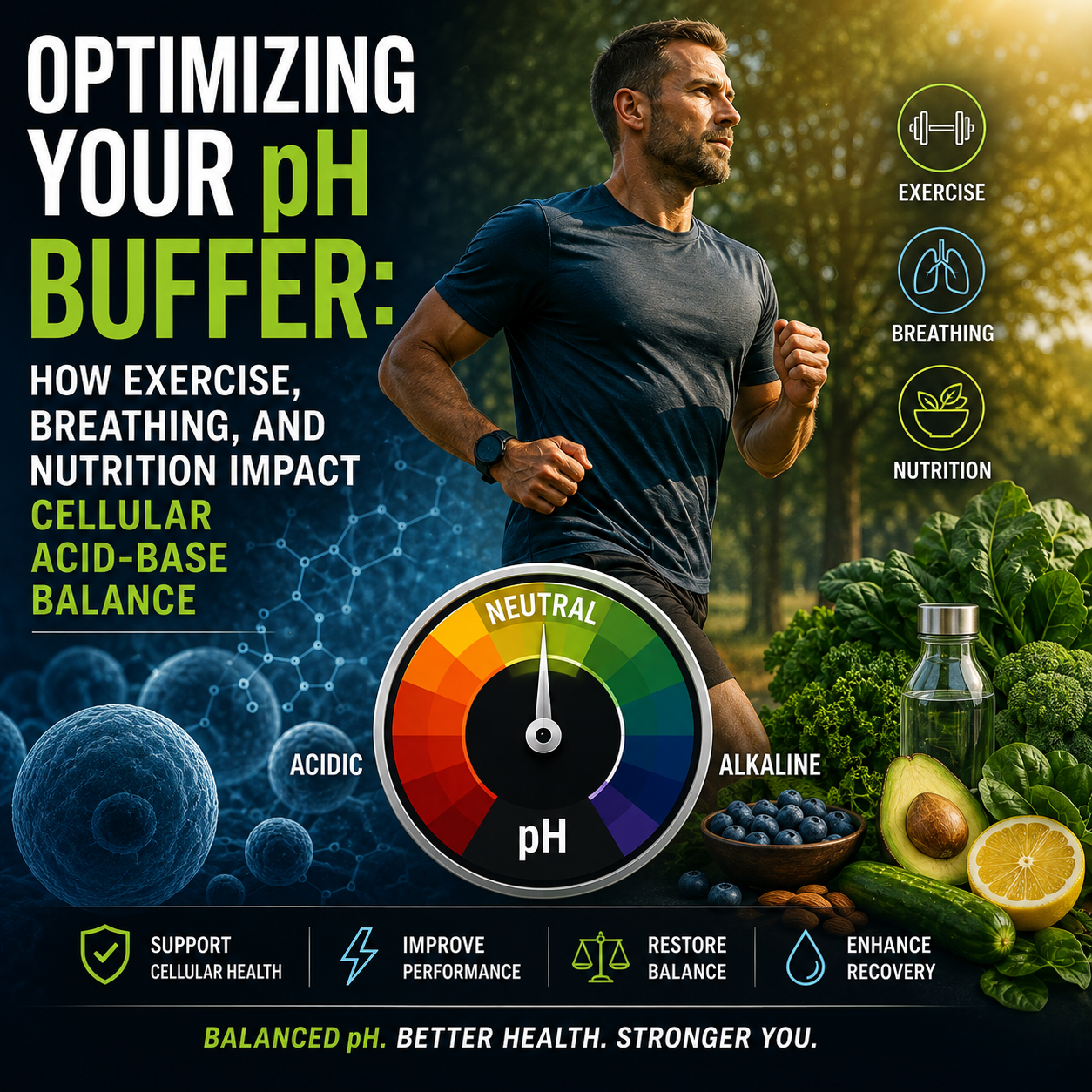
Optimizing Your pH Buffer: How Exercise, Breathing, and Nutrition Impact Cellular Acid-Base Balance In Part 1, we established that your body does not have a single universal pH level. Instead, it strictly manages distinct micro-environments, keeping arterial blood tightly controlled between 7.35 and 7.45.
While fad diets claim that drinking alkaline water will magically rewrite your physiology, the real scientific story centers on buffering capacity: your body's ability to neutralize metabolic waste during high-intensity stress, heavy lifting, and demanding physical exertion.
Understanding how your respiratory system, cellular enzymes, and daily nutrition work together to handle acid loads allows you to train harder, recover faster, and protect your cellular energy systems.
THE SCIENCE OF THE "BURN": WHAT REALLY HAPPENS DURING EXERCISE
When you perform intense exercise—like heavy squat sets or high-intensity sprints—your muscles rely on rapid anaerobic glycolysis for fuel. This process produces energy alongside hydrogen ions (H+).
Contrary to popular belief, lactic acid itself is not the villain causing delayed onset muscle soreness (DOMS). Lactate is actually a valuable fuel source that your heart and liver recycle. The true culprit behind temporary muscle failure is the accumulation of free hydrogen ions, which lowers intra-muscular pH from a neutral ~7.1 down toward ~6.5.
THE INTRA-MUSCULAR ACCUMULATION CASCADE
1 High-Intensity Work (Anaerobic Glycolysis)
2 Hydrogen Ions (H+) Accumulate in Muscle Tissue
3 Muscle pH Drops from 7.1 to 6.5 (Acidosis)
4 Key Glycolytic Enzymes (PFK) Are Inhibited
5 Calcium Binding Impaired leads to Loss of Contraction
6 Temporary "Burn" & Muscle Failure Occurs
When tissue pH drops too far:
Enzyme Inhibition: Phosphofructokinase (PFK), the primary rate-limiting enzyme in energy production, slows down dramatically.
Impaired Contraction: Acidic conditions interfere with calcium's ability to bind to troponin, directly reducing your muscle's ability to contract forcefully.
OFFLOADING ACID: THE LUNG & KIDNEY CONNECTION
Your body utilizes two major organ systems to clear excess metabolic acidity and maintain systemic homeostasis:
The Lungs (Fast-Acting Clearance): The fastest way your body offloads acid during training is through respiration. Carbon dioxide (CO2) in your blood acts as a volatile acid. When H+ ions combine with bicarbonate (HCO3-), they form carbonic acid, which converts into water and CO2.
When you start heavy breathing during a tough set, your brain stem signals your lungs to blow off excess CO2, instantly pulling hydrogen ions out of solution and elevating blood pH back toward baseline.
The Kidneys (Long-Term Balance): While your lungs handle immediate changes during exercise, your kidneys regulate baseline buffering over hours and days by:
Reabsorbing bicarbonate ions from filtrate back into the bloodstream.
Excreting excess hydrogen ions into urine bound to phosphate or ammonium buffers.
TARGETED NUTRITION & SUPPLEMENT STRATEGIES FOR BUFFERING CAPACITY
You cannot change your blood pH with food, but you can provide the minerals and nutrients that support your biological buffering systems.
Key Dietary & Supplemental Buffers:
Beta-Alanine: An amino acid that combines with histidine in muscle tissue to form carnosine. Carnosine acts as a primary intracellular buffer against H+ accumulation during 60 to 240 second high-intensity efforts.
Sodium Bicarbonate: Supplementing with oral sodium bicarbonate directly increases extracellular bicarbonate levels, helping draw hydrogen ions out of working muscle tissue during intense intervals.
Electrolyte Availability (Potassium, Magnesium, Sodium): Crucial for maintaining the cellular membrane potentials that drive acid-base transport proteins across muscle cell walls.
Mineral-Dense Foods: Leafy greens, root vegetables, and fruits supply organic potassium and magnesium salts that lighten the metabolic load on the kidneys during high-protein diet phases.
PRACTICAL PROTOCOLS TO MAXIMIZE RECOVERY & BUFFERING
To keep your cellular buffers working at peak efficiency:
Optimize Intra-Workout Breathing: Do not hold your breath during fatigue. Focus on deep, rhythmic nasal or mouth exhalations between sets to rapidly blow off excess CO2.
Hydrate with Electrolytes: Dehydration impairs kidney filtration and slows down the clearance of nitrogenous and acidic metabolic waste.
Periodize High-Intensity Training: Constant anaerobic red-lining overworks your buffering capacity, spiking cortisol and causing chronic fatigue. Balance high-intensity sessions with Zone 2 aerobic training, which expands mitochondrial density to clear lactate and H+ efficiently.
MASTER YOUR RECOVERY BASELINE WITH PHOENIX FITNESS PRO
Building a high-performing body requires balancing hard training strain with optimal cellular recovery.
With Phoenix Fitness Pro (www.phoenixfitnesspro.com):
Track Workout Volume & Strain: Log your sets and intensity to optimize your training stimulus without burning out your nervous system or recovery capacity.
Monitor Hydration & Nutrition:Ensure you are hitting your daily electrolyte, protein, and micronutrient targets to support natural physiological buffering.
Optimize your training, nutrition, and metabolic recovery today at www.phoenixfitnesspro.com.
Frequently Asked Questions About Body pH Balance
What is normal human body pH?
Normal human arterial blood pH is tightly regulated by renal and respiratory systems between 7.35 and 7.45, making it slightly alkaline. Tissues and fluids within the body vary naturally—for instance, stomach acid maintains an acidic pH between 1.5 and 3.5 to digest food, while skin surface pH sits around 4.7.
Can alkaline water or an alkaline diet change your blood pH?
No. What you eat or drink cannot significantly alter your systemic blood pH. The human body uses buffering systems (primarily bicarbonate, carbon dioxide exhaled by the lungs, and acid excreted by the kidneys) to keep blood pH strictly within 7.35–7.45. Consuming alkaline water merely neutralizes a small amount of stomach acid without altering cellular or blood pH.
Why does urine pH change when changing your diet?
While blood pH remains strictly constant, urine pH changes based on dietary intake because your kidneys actively filter excess acid or base out of the body. Eating acid-forming foods (like meats or grains) prompts the kidneys to excrete extra hydrogen ions into urine, lowering urine pH while keeping blood pH completely balanced.
Scientific References
- International Society of Sports Nutrition position stand: sodium bicarbonate and exercise performance. Journal of the International Society of Sports Nutrition, 2021.
- Long-term high urinary potential renal acid load and low nitrogen excretion predict reduced diastolic blood pressure and increased arterial stiffness. Journal of hypertension, 2011.
Editorial & Scientific Integrity Disclaimer: This article is for informational and educational purposes only and does not constitute medical advice. Always consult a qualified healthcare professional before starting any supplement regimen or dietary change. All physiological and nutritional claims are referenced against primary clinical research (PubMed/NIH) throughout the text. Some links on this page may be affiliate links.
Written by Phoenix Wellness Team
The Phoenix Fitness Pro team researches every article against current evidence and real member experience so you get practical guidance, not hype.
Learn more about Phoenix Fitness Pro