
Food Sequencing for Metabolic Health: How Meal Order Controls Glucose Spikes and Visceral Fat
Written by John Solomou | Founder, Phoenix Wellness Team
Researched & Fact-CheckedPeer-Reviewed Clinical Literature (PubMed / NIH / ISSN)
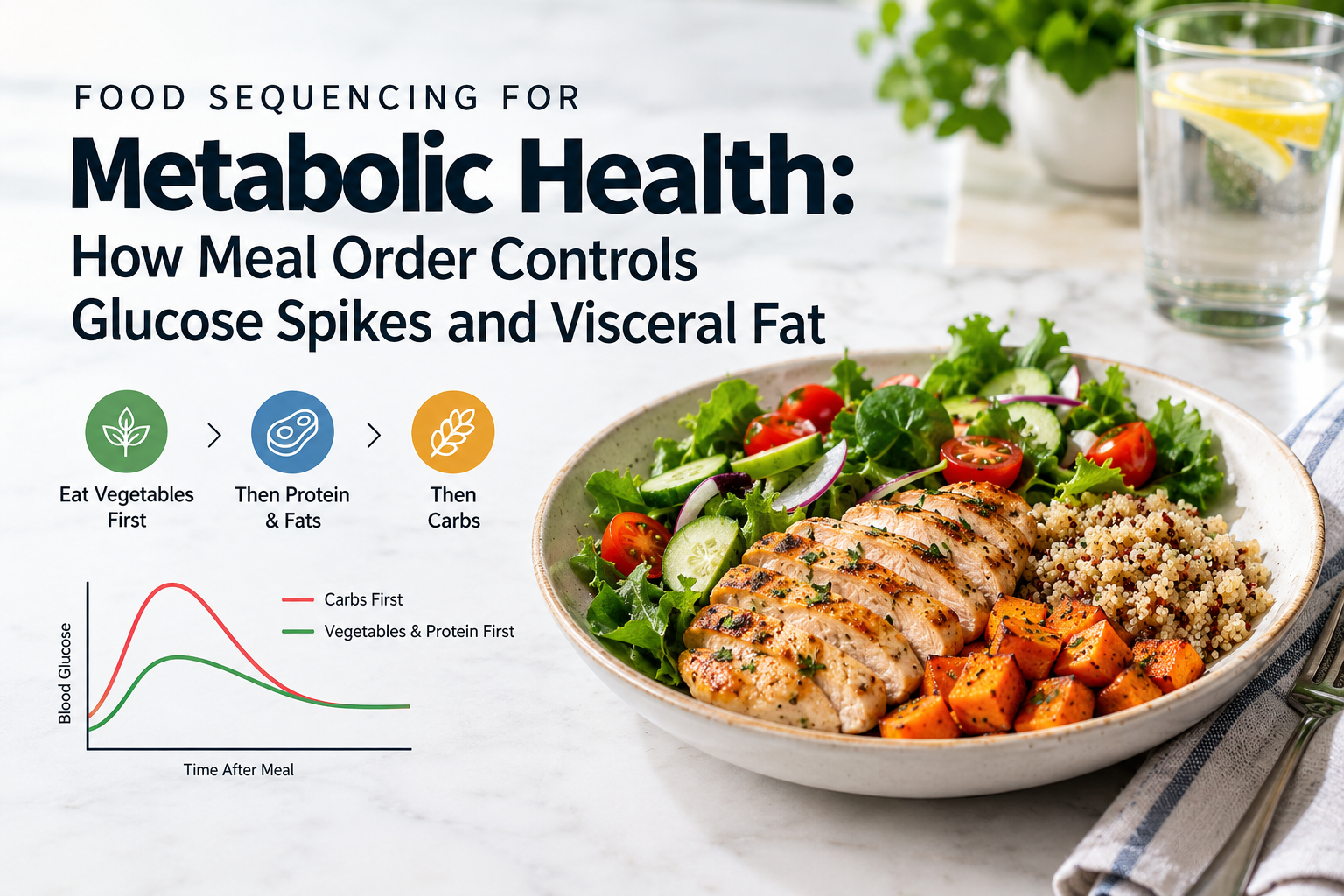
Eating vegetables and protein before carbohydrate-rich foods can reduce the rise in blood glucose after a meal. Research supports this approach as a simple way to influence post-meal glucose and insulin responses. The evidence is much less clear on whether food sequencing directly reduces visceral fat or produces long-term weight loss.
That distinction matters if you are over 35 and want to improve body composition without cutting out foods you enjoy.
You can try food sequencing with an ordinary meal. Eat your broccoli and chicken before your potatoes, or have your salad and eggs before your rice. Keep the meal itself the same and change the order in which you eat it.
What Is Food Sequencing?
Food sequencing means eating the different components of a meal in a particular order. One commonly studied approach is to eat vegetables and protein before carbohydrate-rich foods.
The goal is to reduce the size of the post-meal blood glucose rise. Small clinical studies have found that this order can lower glucose excursions compared with eating carbohydrates first, including in adults with type 2 diabetes and prediabetes. Research in healthy adults has also examined how meal order affects glucose, insulin, and gut hormone responses. PubMed: https://pubmed.ncbi.nlm.nih.gov/26106234/
Food sequencing does not change the carbohydrate content of your meal. It changes when your body encounters those carbohydrates during digestion.
It is also not a requirement for healthy eating. The amount and type of carbohydrate you eat, your overall meal composition, physical activity, and individual glucose regulation all influence your response.
How Food Order Changes Blood Glucose
After you eat carbohydrate-containing foods, digestion breaks much of that carbohydrate down into sugars, including glucose. Glucose enters your bloodstream, and your body responds by releasing insulin. Insulin helps tissues take up and use or store nutrients.
The speed and size of this response depend on several factors, including the meal's carbohydrate content, fiber, protein, fat, preparation, and your individual metabolism.
Eating vegetables and protein first may slow the appearance of glucose in the bloodstream and change the timing of insulin release.
1. Vegetables Provide Fiber
Vegetables such as broccoli, spinach, green beans, and leafy salad contain fiber. Some types of fiber, especially viscous soluble fiber, can slow digestion or nutrient absorption under certain conditions.
Eating vegetables before the rest of your meal can also help you make them a regular part of lunch or dinner. However, fiber does not literally coat your entire intestinal lining to block sugar. The effect depends on the type and amount of fiber and the overall meal.
2. Protein Can Affect Digestion and Gut Hormones
Protein stimulates digestive and hormonal responses that influence how the body handles a meal. Some controlled studies have found that consuming protein before carbohydrate can slow gastric emptying and reduce the post-meal glucose response.
In a small study involving eight people with type 2 diabetes, researchers found that a whey protein preload slowed gastric emptying and reduced the glucose response to a subsequent potato meal. The study also measured changes in gut hormones, including GLP-1. These results support a possible mechanism, but the small clinical sample means they should not be treated as a universal response for every person or meal. PubMed: https://pubmed.ncbi.nlm.nih.gov/19542012/
3. GLP-1 Is Part of the Response
Glucagon-like peptide-1, or GLP-1, is a hormone released by cells in the intestine after eating. It helps regulate glucose metabolism, supports glucose-dependent insulin secretion, and can slow gastric emptying.
Protein and other meal components can influence gut hormone release. However, you should not assume that eating vegetables and protein first produces a specific GLP-1 increase or an effect equivalent to prescription GLP-1 medication. Food sequencing is a meal habit, not a substitute for medical treatment.
What Does the Research Say About Glucose Spikes?
One frequently cited study, published in Diabetes Care in 2015, examined 11 adults with type 2 diabetes who were taking metformin. Participants ate the same mixed meal on two separate occasions, but the food order changed.
When participants ate the vegetables and protein before the carbohydrate foods, the researchers observed lower post-meal glucose levels and a lower two-hour glucose area under the curve than when participants ate carbohydrates first. Insulin responses were also lower at some measured time points. PubMed: https://pubmed.ncbi.nlm.nih.gov/26106234/
The study provides useful evidence, but it was small and measured responses over only two hours. It did not establish that food sequencing reduces visceral fat, prevents diabetes, or improves long-term health outcomes.
A 2018 study involving people with prediabetes also found that eating vegetables and protein before carbohydrate attenuated post-meal glucose excursions compared with eating carbohydrate first. The researchers reported differences in glucose and insulin responses depending on the sequence used. PubMed: https://pubmed.ncbi.nlm.nih.gov/30101510/
Researchers have also studied meal sequence in healthy adults. The PATTERN study examined glucose, insulin, and incretin responses after participants consumed the components of a test meal in different orders. This research helps explain why the sequence of foods may influence short-term metabolic responses, but it does not establish a long-term fat-loss benefit. PubMed: https://pubmed.ncbi.nlm.nih.gov/31053510/
The practical conclusion is straightforward: food sequencing can be useful for managing the glucose response to a meal, but the size of the effect varies. Long-term benefits for weight loss and visceral fat remain uncertain.
Does Food Sequencing Reduce Visceral Fat?
Visceral fat is stored deep inside the abdomen around internal organs. Higher amounts are associated with greater risk of several metabolic conditions. But a temporary reduction in post-meal glucose does not automatically translate into less visceral fat.
Insulin helps your body manage nutrients after you eat. It also temporarily suppresses the release of stored fat for use as fuel. That is a normal response to eating, not evidence that a meal has caused harmful fat accumulation.
Long-term changes in body fat depend on sustained energy balance, food intake, activity, sleep, genetics, and other individual factors. Age-related changes in muscle mass and activity can also affect metabolic health, but they do not mean every adult over 40 will develop insulin resistance or store excess glucose as visceral fat.
Food sequencing may help some people manage hunger or make meals more satisfying, but research has not established that this habit alone produces meaningful visceral fat loss.
If reducing abdominal fat is your goal, focus on the habits with a clearer role in body composition:
- Eat enough protein to support muscle maintenance.
- Include vegetables, fruit, and other fiber-rich foods regularly.
- Adjust total food intake to suit your goals.
- Perform resistance training consistently.
- Walk and move throughout the day.
- Get enough sleep and allow time for recovery.
Food order can support those habits. It cannot replace them.
A Simple Food Sequencing Method
You do not need a special meal plan or expensive equipment. Start by changing the order of the foods you already eat.
Step 1: Eat Your Vegetables First
Begin with non-starchy vegetables, such as broccoli, spinach, green beans, cucumbers, or a small salad.
If you are eating a mixed dish, such as a stir-fry, you do not have to separate every ingredient. Just make sure vegetables are a regular part of the meal.
Step 2: Eat Your Protein
Continue with foods such as eggs, chicken, fish, lean meat, tofu, beans, or other protein sources that fit your diet.
Protein supports muscle maintenance, which becomes increasingly important as you get older. Your total daily protein intake and resistance-training routine matter more for preserving muscle than the order in which you eat your protein at one meal.
Step 3: Eat Your Carbohydrates
Finish with foods such as potatoes, rice, whole grains, bread, or fruit.
You do not need to wait a set number of minutes between foods. The studies generally examined eating meal components in sequence during the same meal, sometimes with a short interval between them. There is no established waiting period that everyone needs to follow.
Step 4: Keep the Meal Balanced
Food sequencing does not make portion sizes irrelevant. A large meal can still provide more energy than you need, even if you eat the vegetables first.
Build meals around an appropriate protein source, vegetables or fruit, carbohydrate foods that suit your needs, and fats in reasonable amounts. Adjust the portions to your appetite, activity, and goals.
What Might Food Sequencing Look Like in Real Life?
You can apply the idea without changing your favorite foods.
| Meal | Vegetables or fiber first | Protein next | Carbohydrate last |
|---|---|---|---|
| Breakfast | Berries, if included | Eggs or Greek yogurt | Toast or potatoes |
| Lunch | Salad or cooked vegetables | Chicken, fish, or beans | Rice, bread, or potatoes |
| Dinner | Broccoli or green beans | Beef, fish, tofu, or chicken | Rice, pasta, or potatoes |
These are examples, not a medically prescribed sequence. You do not have to follow the order perfectly, and you do not need to separate foods that are already mixed together.
If you eat oatmeal with yogurt and berries, for example, you can simply eat the meal as prepared. There is no strong evidence that rearranging every bite of every meal is necessary for good health.
Pair Food Sequencing With a Short Walk
A short walk after a meal is another practical habit worth considering.
When your muscles contract during movement, they take up glucose from the bloodstream. Muscle contraction can stimulate glucose uptake through pathways that do not depend entirely on insulin. This is one reason physical activity can help regulate blood glucose.
Try walking for about 10 minutes after lunch or dinner if your schedule and physical condition allow. You can start with less time and build gradually.
The walk does not need to be fast or exhausting. Consistency matters more than turning it into another hard workout.
If you have diabetes and use insulin or medication that can cause low blood glucose, discuss significant changes in meal timing or activity with your healthcare professional. Your medication and individual circumstances may affect how you should approach these habits.
Tools and Nutrition Resources
Food sequencing works best as part of a broader nutrition plan. If your goal is fat loss, estimating your energy needs can help you plan meals without assuming that food order alone will change body composition.
Ready to estimate your energy needs? Use the Phoenix Fitness Pro Calorie Deficit Calculator to explore a starting point for a calorie deficit. Treat the result as an estimate, not an exact prescription.
If you struggle to get enough protein from meals, the Phoenix Fitness Pro Whey Protein Isolate Guide can help you evaluate one optional way to supplement your diet. Whole foods remain a strong foundation, and protein powder is not necessary for everyone.
Meal preparation can also make the habit easier. Containers and a simple plan for lunches and dinners can help you include vegetables and protein consistently. Browse the Phoenix Fitness Pro equipment collection for meal-preparation and other fitness resources.
Questions People Ask
Does food sequencing work if I mix all my food together?
A mixed meal still contains the fiber, protein, fat, and carbohydrate that influence digestion and glucose response. Research suggests that eating vegetables and protein before carbohydrate can reduce post-meal glucose excursions in some settings, but it has not established that separating foods is necessary or that it always produces the largest benefit. Eat balanced meals in a way that works for you.
Can food sequencing help me lose weight without a calorie deficit?
Food sequencing has not been shown to cause reliable fat loss without an overall energy deficit. It may help some people manage meals or appetite, but it is not a replacement for a sustainable eating pattern that matches their goals.
Is food sequencing useful if I do not have diabetes?
It may reduce the post-meal glucose response in some people, including those without diabetes. However, evidence that every healthy adult needs to sequence meals, or that doing so prevents future disease, is lacking. You can use the method if it suits you, but it is not a requirement for good metabolic health.
Can I eat fruit as part of a meal?
Yes. Fruit provides fiber, water, vitamins, and other nutrients. You can eat it with a meal or on its own, depending on your preferences and individual glucose response. Eating fruit last may change the glucose response in some meal settings, but it does not guarantee that blood glucose will not rise.
How long should I wait between protein and carbohydrates?
There is no established waiting period for general use. You can eat vegetables and protein first and then continue with carbohydrate foods during the same meal. Research protocols vary, so you should not assume that a specific interval is required for everyone.
Does food sequencing directly reduce belly fat?
That has not been established. Studies of meal order have mainly measured short-term glucose, insulin, and related responses, rather than long-term changes in visceral fat. Reducing abdominal fat generally requires sustainable changes in overall energy balance and lifestyle.
Should I use food sequencing if I take diabetes medication?
Ask your healthcare professional if you are considering substantial changes to meal timing, carbohydrate intake, or activity. Food sequencing does not replace prescribed medication or individualized diabetes care. If you monitor glucose, your own readings may help you and your clinician understand how different meals affect you.
Scientific References
- Food Order Has a Significant Impact on Postprandial Glucose and Insulin Levels. Diabetes Care, 2015. https://pubmed.ncbi.nlm.nih.gov/26106234/
- The impact of food order on postprandial glycaemic excursions in prediabetes. Diabetic Medicine, 2018. https://pubmed.ncbi.nlm.nih.gov/30101510/
- Postprandial glucose, insulin and incretin responses differ by test meal macronutrient ingestion sequence (PATTERN study). Clinical Nutrition Research, 2019. https://pubmed.ncbi.nlm.nih.gov/31053510/
- Effects of a protein preload on gastric emptying, glycemia, and gut hormones after a carbohydrate meal in diet-controlled type 2 diabetes. Diabetes Care, 2009. https://pubmed.ncbi.nlm.nih.gov/19542012/
Editorial & Scientific Integrity Disclaimer: This article is for informational and educational purposes only and does not constitute medical advice. Always consult a qualified healthcare professional before starting any supplement regimen or dietary change. All physiological and nutritional claims are referenced against primary clinical research (PubMed/NIH) throughout the text. Some links on this page may be affiliate links.
Written by Phoenix Wellness Team
The Phoenix Fitness Pro team researches every article against current evidence and real member experience so you get practical guidance, not hype.
Learn more about Phoenix Fitness Pro